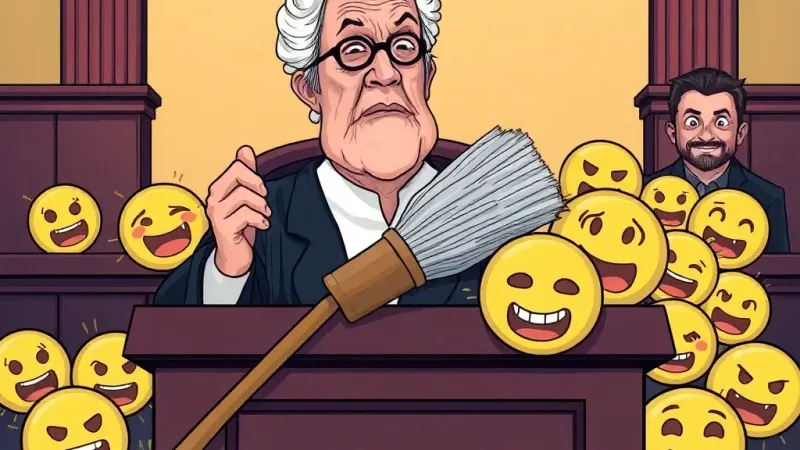
DELAWARE — Delaware Chancery Court Judge Kathaleen McCormick has officially denied that a single “thumbs-up” emoji on her LinkedIn account indicated bias against prominent CEO Elon Musk, yet proactively reassigned three high-profile shareholder lawsuits involving him to new judges, citing the paramount importance of “preserving digital impartiality protocols” within the judiciary.
The unprecedented reassignment follows claims from Musk's legal team, who asserted that the judge's alleged positive reaction to a 2 post critical of their client created a perception of unfairness. While Judge McCormick explicitly stated she had no recollection of the digital interaction and found no evidence of it, the court deemed the potential for perceived emoji-based prejudice too great to ignore, particularly in cases involving litigants with significant digital footprints.
“The modern courtroom extends beyond its physical walls into the vast and often treacherous landscape of the internet,” explained Dr. Evelyn Finch, a newly appointed Professor of Digital Jurisprudence at the University of Scranton, who advises courts on online conduct. “Even a phantom thumbs-up, if it generates sufficient concern from a powerful plaintiff, must be treated with the gravity of a full-scale procedural impropriety. We’re navigating uncharted waters where the mere suggestion of an algorithmically-generated sentiment can alter the course of multi-billion-dollar litigation.”
The reassignment will require the new judges to familiarize themselves with the intricacies of three separate shareholder derivative lawsuits against Musk and Tesla, a process estimated to add several months to the proceedings and incur significant additional legal costs. Court officials declined to comment on whether new “2 sentiment sensitivity training” would be implemented for all judicial staff, but confirmed that an “algorithmic integrity audit” of all court-affiliated online accounts was now underway.
Legal experts suggest the ruling sets a groundbreaking precedent, implying that the judiciary must not only be free from actual bias but also from any online interaction that could remotely suggest an inclination towards or against a litigant, even if that interaction never occurred. Critics, however, fear that future cases could be subject to similar delays as litigants increasingly scrutinize the digital history of judges, clerks, and even court-affiliated cafeteria staff for any hint of a ‘like,’ ‘share,’ or even an accidental ‘poke’ that might betray a hidden agenda.
Moving forward, all Delaware judges have reportedly been instructed to maintain a strict 'ghosting' policy across all digital platforms, ensuring their online personas remain as unopinionated as a freshly formatted hard drive.