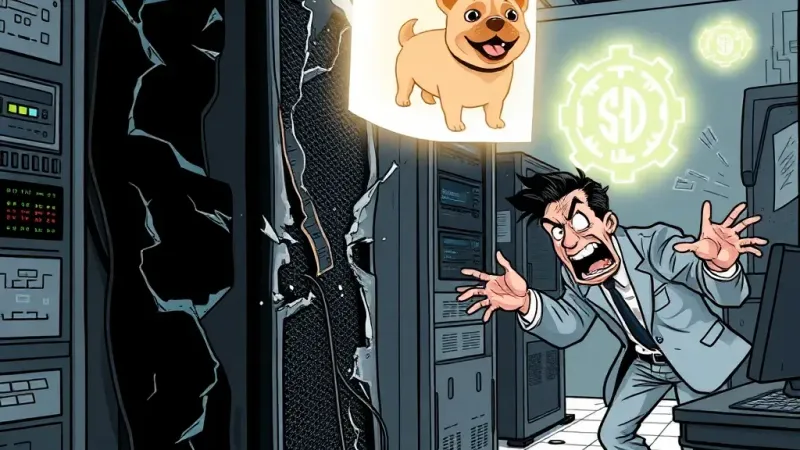
TEHRAN, 2 – The Information and Communication Technology (ICT) department at Tehran’s Sharif University of Technology issued an official statement today confirming a significant “unplanned external server reset” following a strike on its primary networking facility. The incident has resulted in widespread disruption to campus-wide internet connectivity, leaving thousands of students and faculty without reliable digital access to their various platforms and online services.
Dr. Kianoush Rahimi, Director of University IT Services, detailed the highly technical challenges in an urgent memo to stakeholders. “We are currently grappling with unprecedented disruptions to our core routing protocols and several distributed denial-of-service mitigation appliances,” Dr. Rahimi explained, specifying the sudden “re-initialization event” that has impacted multiple key data centers. He further elaborated that the primary concern is the “complex post-event diagnostics” required to ascertain the full extent of the data re-synchronization issues, noting a temporary but significant loss of uptime across all internal services, including the university’s intranet portal, the faculty’s shared cloud storage platform, and the crucial student academic advising system. The sheer volume of concurrent connection losses, he added, has put a strain on even backup power infrastructure.
Students, however, have expressed more immediate and visceral frustrations, focusing on the abrupt halt to their daily digital lives. Leila Mohammadi, a third-year computer 2 major, voiced her outrage from a campus cafe, where students were seen huddling around a single, struggling public Wi-Fi hotspot. “My 14-day streak on Duolingo is gone, and I can’t submit my group project for ‘Advanced Algorithmic Trading’ because the campus VPN is completely unresponsive,” Mohammadi lamented, scrolling despairingly through cached 2 feeds. “How are we supposed to conduct groundbreaking research, collaborate on crucial assignments, or even stream our favorite shows if the network is just… reset without warning? This is crippling to our academic and social workflow.” Other students reported similar issues with online gaming servers, accessing critical academic resources such as TikTok, Instagram, and their personal cryptocurrency wallets.
In response to the escalating digital crisis, the university administration has assured the community that it is taking swift and decisive action. A spokesperson, Ms. Parvin Alavi, confirmed that the IT department has “expedited a Tier 1 incident ticket” with their regional internet service provider for “urgent bandwidth allocation review and potential fiber optic line repair.” Additionally, a “Level 3 field support team” has been deployed to manually reboot affected network arrays and assess physical damage to critical server racks. “Our paramount concern remains data integrity, especially for our extensive collection of archived internet memes, the university’s internal blockchain ledger, and the historical records of campus esports tournaments,” Ms. Alavi stated, adding that contingency plans for a rapid return to “analog learning modalities” are being reviewed, which include the controversial distribution of physical textbooks.
Despite the extensive damage to the building, preliminary assessments have thankfully confirmed that the facility’s resilient 2004-era Ethernet ports, known for their robust and almost indestructible design, appear to have sustained minimal functional impact. Efforts are underway to reconnect legacy systems through these operational ports, providing a glimmer of hope for the restoration of dial-up services.