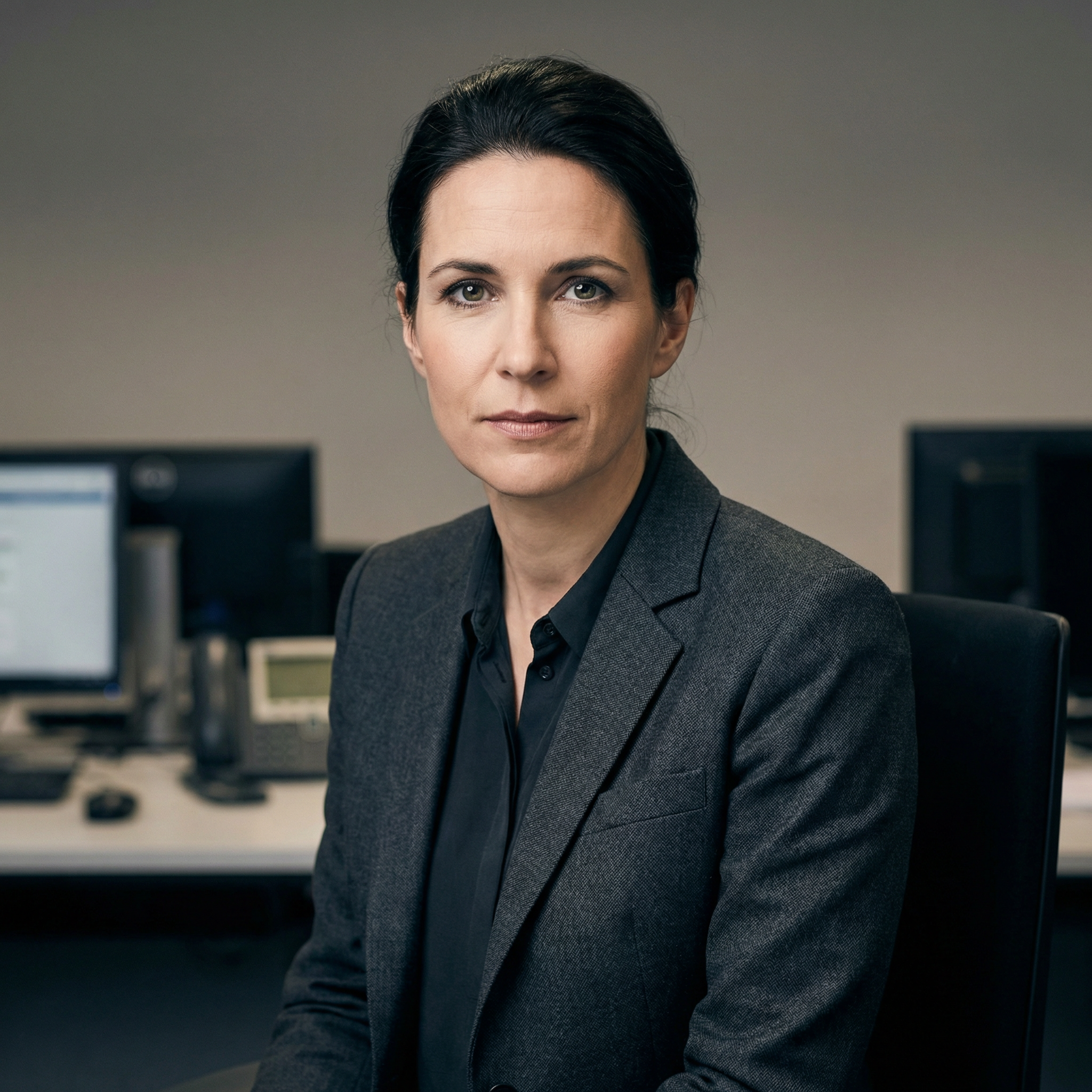

WASHINGTON D.C. — In an unprecedented move, the Department of International Legal Affairs (DILA) today circulated a memo to all governmental and campaign-affiliated personnel, explicitly outlining the general inadvisability of committing war crimes, particularly those involving the intentional targeting of civilian infrastructure. The directive, titled 'Preventative Guidance on Global Humanitarian Law Compliance,' arrived after multiple high-profile statements from a leading presidential candidate regarding potential military actions against foreign adversaries, specifically mentioning the deliberate incapacitation of critical utilities.
Sources close to the department indicated the memo was a direct, albeit diplomatically phrased, response to recent public remarks concerning the hypothetical destruction of power grids in rival nations, and other infrastructure essential for civilian life. "Frankly, we thought this was self-evident," stated Dr. Evelyn Reed, head of DILA's Proactive Legal Compliance Division. "Our role is typically to interpret complex treaties, not to remind principal actors that blowing up non-military essential services is, you know, broadly discouraged under Geneva Conventions Article 54, Paragraph 2, subparagraph 'B.' It feels less like high-level legal counsel and more like we’re back to teaching basic playground rules about not setting things on fire."
The internal memo, obtained exclusively by Hambry, details a comprehensive list of actions generally considered 'non-compliant' with international statutes. These include, but are not limited to, targeting hospitals, schools, water treatment facilities, and "any utility crucial for the survival of the civilian population, even if it might mildly inconvenience an enemy's war effort." It also includes a robust section on "Optics & International Repercussions," which subtly warns that such acts, while potentially satisfying in the short term or during a rally speech, "tend to generate overwhelmingly negative press cycles, trigger extensive UN Security Council debates, and can complicate future trade negotiations or even personal travel plans for involved parties."
A spokesperson for the campaign, Chad Vandelay, clarified that any discussions of "infrastructure recalibration" or "aggressive de-electrification protocols" were merely "strategic thought exercises" and "part of a robust dialogue about leveraging all available options within the theoretical framework of geopolitical dominance." He added, "Of course, we respect international law. We just believe in exploring the full spectrum of possibilities before respectfully complying. Sometimes you have to push the envelope to see where the envelope actually is, and if it's made of a really tough, war-crime-resistant material. We're just… rule-benders with maximum plausible deniability."
International law scholars outside of DILA expressed a mix of bewilderment and relief. Professor Alistair Finch, a tenured expert in global conflict ethics at the prestigious Rothchild School of Jurisprudence, commented, "While it's unusual to see a government explicitly stating 'don't commit war crimes' outside of basic military training, I suppose in the current climate, it's a pragmatic step. We've reached a point where fundamental tenets of international conduct require official reaffirmation, much like reminding a toddler not to eat crayons, but with global ramifications."
Legal analysts are now debating whether the next memo will cover the basics of "not stealing candy from babies" or "refraining from kicking puppies and then blaming the puppies."