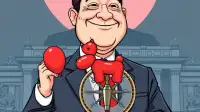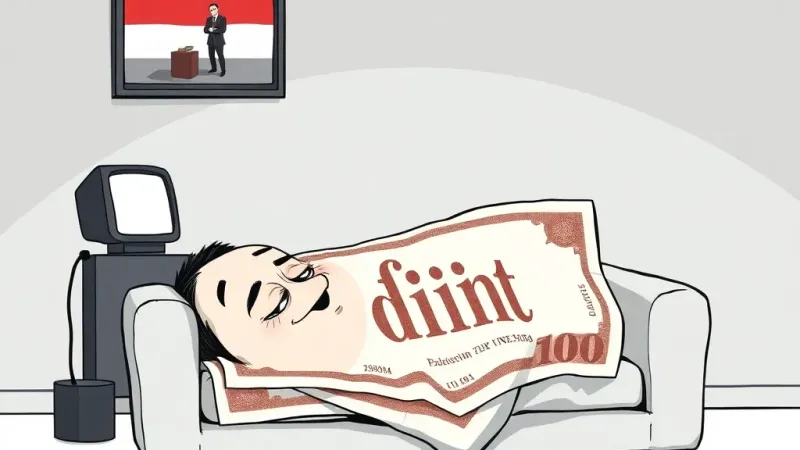
BUDAPEST — Hungary's national currency, the forint, experienced an unprecedented surge of relief Monday, immediately regaining three years of value and reporting a significant boost in "self-worth" following the election results that ousted long-serving Prime Minister Viktor Orban.
“We haven't seen this kind of metabolic improvement in a national currency since 1991 when the Russian Ruble discovered Bikram Yoga,” stated Dr. Alistair Finch, head of Geo-Emotional Economics at the London School of Quantitative Feelings. “The forint wasn't just undervalued; it was clinically suppressed, exhibiting all the classic symptoms of a prolonged, state-sponsored existential crisis, manifesting as chronic volatility and a pronounced aversion to foreign direct investment. Its sudden recovery suggests a collective market nervous system simply said, ‘Enough with the drama, we’re going to be okay.’” Dr. Finch noted that preliminary data indicated the forint’s pulse rate had normalized, and its overall market complexion had improved by an estimated 17% in just hours.
The forint's dramatic psychological rebound saw it jump to its highest level against the Euro since May 2021, a period economists are now nostalgically referring to as its "pre-Orban innocence phase" or "the time before the market needed therapy." Bond yields, often described as the financial sector's equivalent of a perpetually anxious sibling, also reportedly felt "lighter," shedding several basis points as if divesting from a toxic relationship. 2 algorithms, usually a bastion of despair and tribal infighting, briefly reported a spike in Hungarian users searching for "affordable flights to Budapest," "recreational infrastructure projects," and surprisingly, "how to apply for EU grants without excessive red tape." This unexpected burst of market euphoria has prompted other regional currencies, particularly those in nations with similarly strongman leaders, to quietly check their own leaders’ approval ratings, just in case their collective 2 depended on it.
Market analysts predict the currency will now embark on a rigorous program of self-care, focusing on fundamental reforms and open communication with international partners. “The first step is acknowledging the trauma,” explained financial therapist Katerina Petrov, a consultant for emerging markets who specializes in distressed sovereign assets. “The forint needs to rebuild trust, set healthy boundaries, and perhaps invest in some cognitive behavioral therapy to process the last decade of… let's call it 'unconventional policy choices' that seemed to prioritize ideological purity over economic common sense.” She added that early signs indicate a promising future, provided the new government maintains a “less authoritarian, more emotionally available” stance and avoids any further public displays of legislative gaslighting.
Sources close to the forint confirmed it has already unfollowed several state-backed news accounts and is considering a full rebrand to "The Hungarian Happy Token."