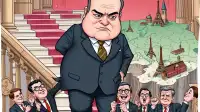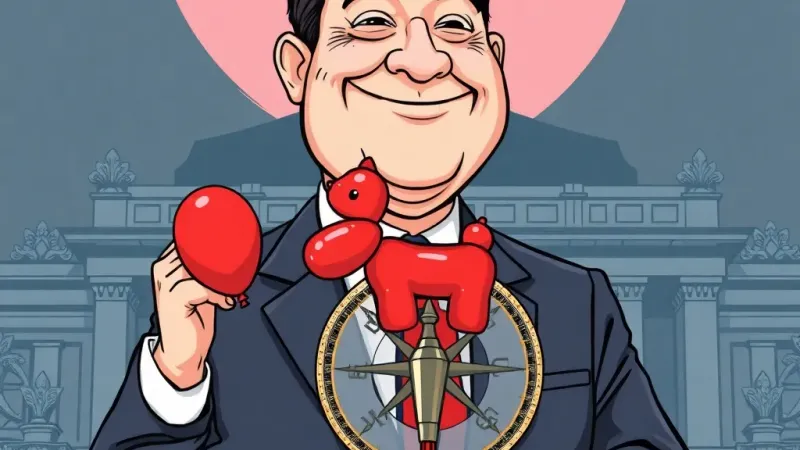
BUDAPEST — In a stunning display of political timing, a recently ousted senior official within Hungarian Prime Minister Viktor Orbán’s Fidesz party has courageously discovered a host of profound ethical breaches and democratic erosion he apparently missed during his decade-plus tenure at the regime's highest echelons. The official, Péter Magyar, formerly a trusted government insider, spokesperson, and diplomat, unveiled his newfound critical faculties just weeks after his wife, a former minister, resigned from her post following a public scandal. This sudden, acute awareness has been widely praised as a heroic act of civic duty, particularly by those who believe one’s deepest convictions are best revealed only after personal political utility has expired.
Sources close to Magyar indicate his moral awakening began precisely on the morning his access to government email servers was revoked. "It was like a switch flipped," described a former colleague, speaking anonymously. "One day he was defending every policy, no matter how egregious, often with a zeal that suggested genuine belief. The next, he was passionately denouncing the very architecture he helped design, claiming he had 'secretly harbored concerns' while actively implementing them." Political analysts are calling it an unprecedented, almost spiritual, confluence of personal career setback and sudden, robust ideological conviction, perfectly aligned for maximum media impact.
"This is a classic 'ex-post-facto' epiphany, a political phenomenon as old as power itself," stated Dr. Eleonora Szabó, a professor of advanced political self-preservation at the Pannonian Institute for Strategic Opportunism. "Many public figures find their deepest principles emerge most powerfully when those principles align perfectly with their current professional grievances. It’s a remarkable transformation, akin to a wolf suddenly discovering a passion for veganism immediately after being exiled from the pack and needing a new revenue stream." Dr. Szabó noted that such individuals often transition seamlessly from architects of the status quo to its most vocal, and frequently, financially compensated, critics, often positioning themselves as the sole saviors of the very system they helped dismantle.
Magyar’s brave stand includes allegations of widespread corruption, systemic abuse of power, and a general erosion of democratic norms – charges that somehow remained conveniently invisible to him while he held a directorship at the Student Loan Center, sat on the board of the national electricity grid, and managed communications for various government initiatives under the very same leadership he now labels as "authoritarian." His public appearances have been marked by passionate declarations that he "can no longer stand by" while the nation deviates from its core values, neglecting to specify the exact historical moment he *could* stand by, or indeed, actively participate in its deviation without issue.
The former insider has reportedly launched a "truth tour" across Hungary, where he plans to meticulously detail every flaw in the system he helped operate, often illustrating his points with PowerPoint slides he likely helped design. His revelations are expected to escalate, with sources indicating he may soon expose the shocking truth that some politicians occasionally engage in nepotism or prioritize their own interests. One close confidant, who also recently lost his government consultancy contract, suggested Magyar's next groundbreaking expose will concern the surprisingly uncomfortable seating arrangements in parliamentary chambers.
Citizens are reportedly bracing for his imminent discovery that high-ranking political office historically comes with substantial financial benefits.