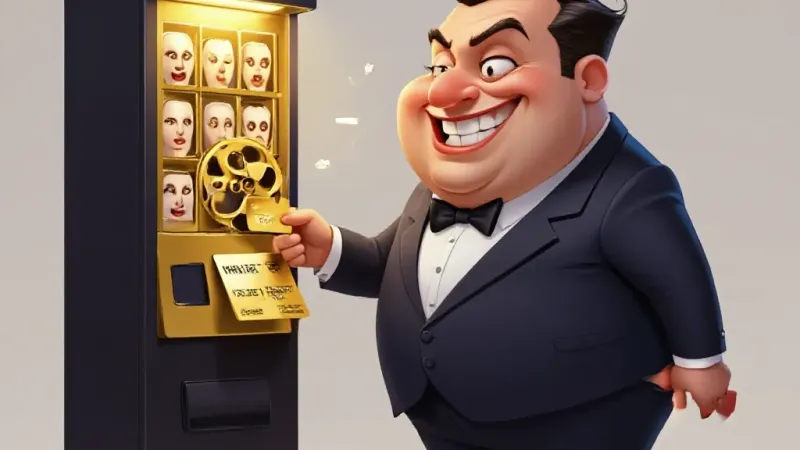
LOS ANGELES – As public hand-wringing over AI deepfakes reaches a fever pitch, sources within major Hollywood studios confirm a quiet, almost gleeful consensus: the technology is less a threat and more a long-overdue market correction for demanding talent. While public statements condemn the unauthorized use of celebrity likenesses, behind closed doors, executives are reportedly toasting to the future of "streamlined content creation" where actors' demands are no longer a factor, and artistic temperaments have been algorithmically optimized out of existence.
"Look, nobody *wants* to deal with another 'creative differences' walk-off or a seven-figure demand for an extra week of reshoots," revealed a senior Synergy & Innovation Strategist at a major film studio, speaking anonymously while polishing a virtual Oscar. "AI-generated performances? They don't have agents. They don't have trailers. They don't even have *feelings*. It’s pure, unadulterated efficiency. We're talking about infinite content loops, zero bathroom breaks, and absolutely no method acting rants that hold up a multi-million dollar production. The return on investment is, frankly, biblical."
The financial implications are staggering. A leaked internal memo, optimistically titled "Project Prometheus: Unshackling the Narrative," detailed potential savings of up to 80% on talent acquisition and production costs by 2030, projecting a complete overhaul of the current compensation model. The document outlined scenarios where entire movie franchises could be shot with digitally replicated actors, negotiating contracts only once for their likeness, or even bypassing them entirely in perpetuity under "digital asset licensing" agreements. This "digital IP optimization" also allows studios to produce content across multiple platforms simultaneously, cloning performances for international markets, video games, and even bespoke interactive experiences, all managed by a single digital rights platform.
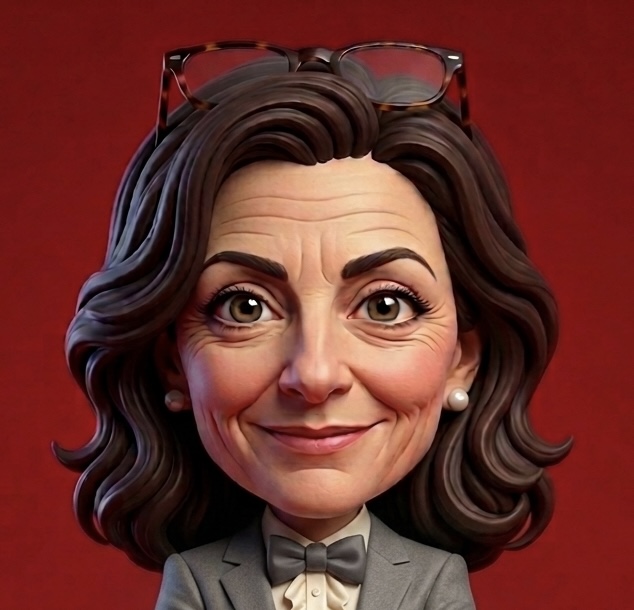
"It's about democratizing the talent pool, not stifling it," claimed Dr. Evelyn Thorne, head of Digital Asset Management at a leading IP monetization firm, during an investor call that inexplicably featured a CGI avatar of Thorne herself. "Why limit your storytelling to the finite availability of a single human being when their digital twin can work 24/7 across every time zone, in every genre imaginable? We can now cast the ideal actor for any role, regardless of their current living status or pesky desire for things like 'fair compensation' or 'rest periods.' The potential for content churn is unprecedented, and the liability? Negligible."
While industry guilds and unions continue to vocally oppose the unauthorized use of AI deepfakes, their efforts are increasingly seen by studio heads as mere public relations exercises. The real battle, say observers, is not *if* AI will replace human talent, but *who* will control the intellectual property of digital doppelgängers. The current "scramble" to protect celebrities' images is less about ethical concern and more about staking a claim on what will undeniably become the most valuable asset in entertainment: a perpetually available, infinitely malleable, and entirely silent workforce, ready to perform on cue, forever.
The biggest threat to Hollywood isn't deepfakes; it's realizing they don't have to pretend to care about human actors anymore once the technology is perfected.