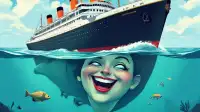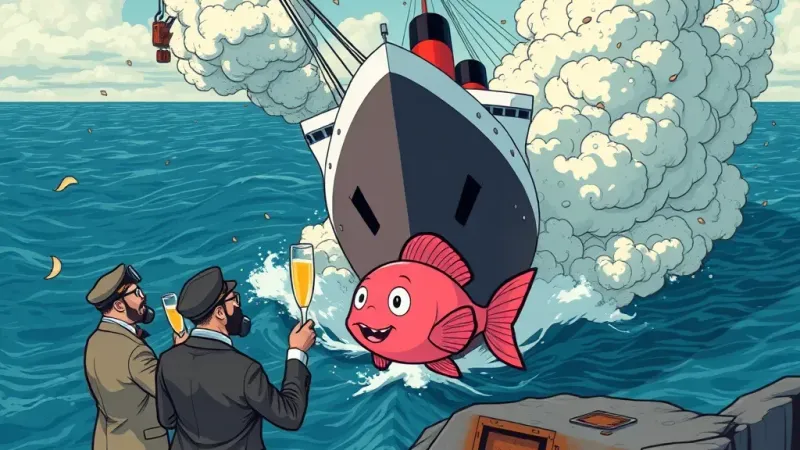
Environmentalists celebrated a major victory for marine biodiversity Tuesday as the historic ocean liner SS United States was successfully towed out to sea, packed with industrial-grade toxins, and aggressively plunged into the Atlantic Ocean to become the world's largest artificial reef.
The majestic 990-foot vessel, which once carried presidents, Hollywood icons, and wealthy socialites across the pond in mid-century luxury, will now serve a far more noble purpose: providing a claustrophobic, rust-choked metal tomb for local groupers and bottom-feeders who have long suffered from a lack of abandoned human infrastructure in their natural habitat.
"For too long, local marine life has been forced to rely on pathetic, naturally occurring coral formations that offer zero structural integrity and absolutely no exposure to historical lead-based paint," said Dr. Vance Sterling, a marine conservationist funded entirely by industrial shipping conglomerates. "By sinking a floating monument filled with fifty million pounds of heavy metals and decades of accumulated nicotine stains, we are finally giving these fish the luxury high-rise living they desperately deserve. It is essentially coastal gentrification, but for groupers."
Local reef-dwellers, who have watched their neighborhoods rapidly gentrified by invasive lionfish and corporate wind turbine installations, reportedly welcomed the new addition, noting that a massive dead luxury liner sitting directly on top of their ecosystem is a massive step up from actual environmental protection.
According to project planners, the decision to scuttle the vessel rather than restore it was purely economical. Preserving a floating piece of American history requires billions of dollars in specialized labor, historical preservation grants, and tedious adherence to maritime safety standards. Sinking it, on the other hand, costs a fraction of the price and allows corporate stakeholders to legally rebrand an act of marine dumping as an aggressive act of profound philanthropy.
"People ask us, 'Why not turn it into a floating museum where people can learn about the golden age of transatlantic travel?'" explained corporate liaison Marcus Vance, wiping a tear from his eye while adjusting his expensive silk tie. "And I look them dead in the eye and I say, 'Do you know how much museum tickets cost? Do you know how hard it is to insure a historic artifact against maritime disasters?' It is far cheaper, far easier, and infinitely more emotionally resonant to simply push the entire thing off a barge and tell the public we are saving the sea turtles. That is what true leadership looks like."
Environmental protection agencies have rushed to endorse the project, noting that dumping massive quantities of manufactured steel and synthetic materials into an already fragile marine ecosystem is technically legal as long as you call it a habitat enhancement initiative. Officials confirmed that marine life will experience immediate benefits, including a stunning new playground of sharp jagged edges, impenetrable bulkheads, and mysterious chemical runoff that is guaranteed to jumpstart evolution in ways scientists can only begin to imagine.
"We are looking at a brilliant new frontier in ecological management," Sterling added, staring out toward the horizon where the ship's final mast slipped beneath the waves, taking a century of industrial manufacturing straight to the ocean floor. "If dumping toxic waste is wrong, then I simply do not want to be right. Besides, if the fish didn't want a massive steel coffin dropped on their heads, they should have bought real estate further inland."