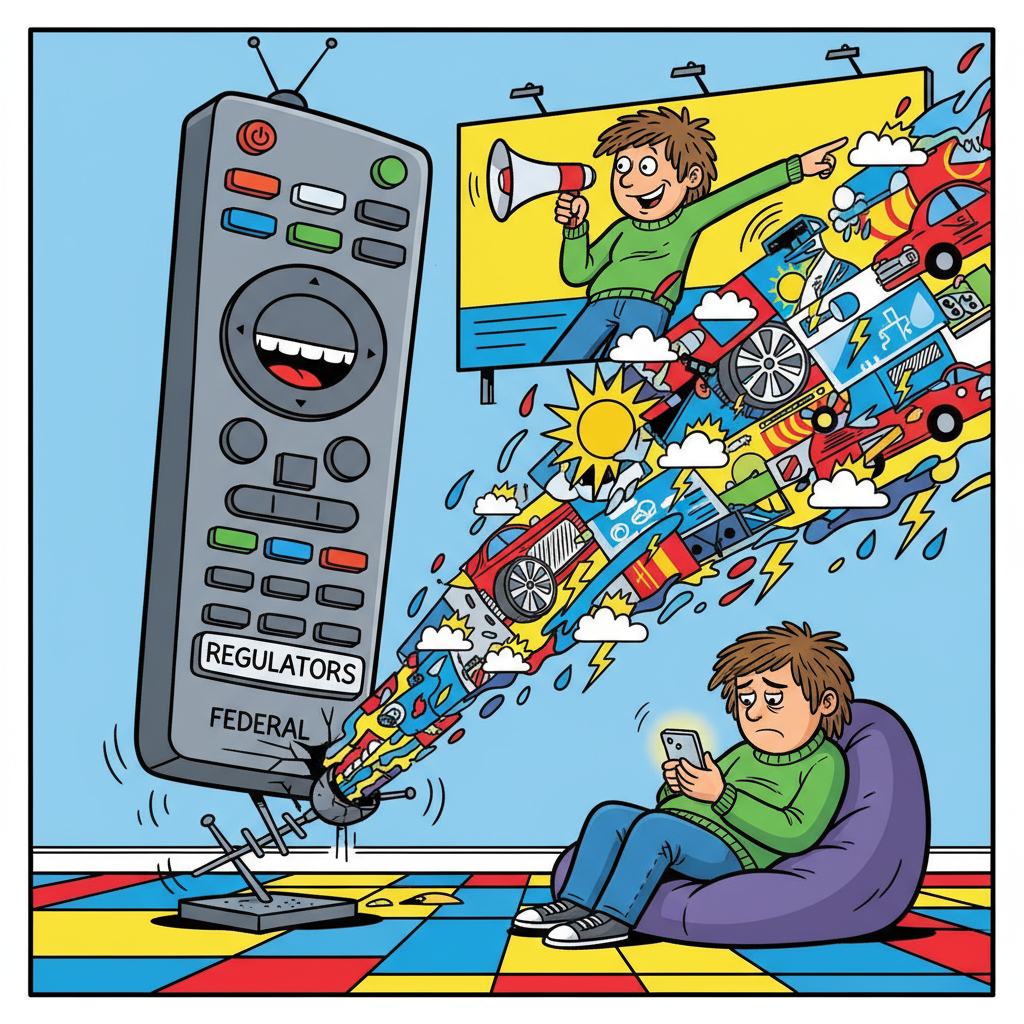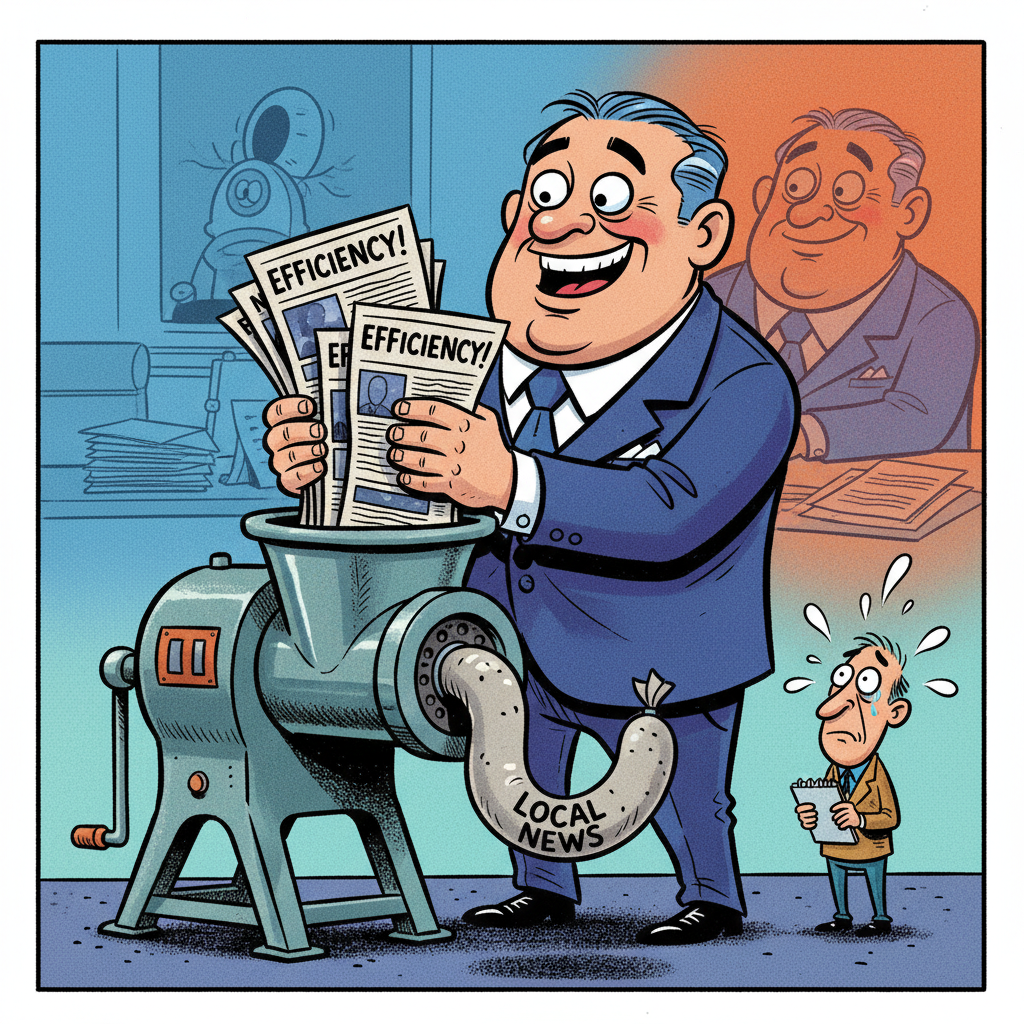
WASHINGTON D.C. — The Federal Communications Commission (FCC) has officially approved the merger of Nexstar and Tegna television stations, a move hailed by industry insiders as a crucial step towards optimizing the nation’s local news landscape. The decision ensures that communities across America will now benefit from a more cohesive and, crucially, less varied approach to reporting on their immediate surroundings.
“This consolidation represents a monumental leap forward in the fight against redundant local reporting,” stated FCC Commissioner Evelyn Harding in a press release. “Why have 20 different stations covering the same municipal budget meeting with slightly different B-roll when one perfectly adequate, centrally-produced segment can be distributed to all? It’s about synergy, efficiency, and giving the public exactly what they need: a singular, authoritative perspective.”
Critics, however, voiced concerns that the move could further erode local journalistic independence. “It’s like replacing a vibrant ecosystem with a monoculture,” commented Dr. Arthur Finch, a media ethics professor at the University of East Mitten. “Soon, every local news anchor will be reading the same script, probably about how great the new corporate overlords are, followed by a weather report that’s somehow also sponsored by them.”
Nexstar-Tegna spokespeople emphasized that the combined entity would unlock unprecedented economies of scale, allowing for greater investment in “content creation” and “audience engagement strategies.” One executive, who wished to remain anonymous to avoid having to explain what those terms actually mean, noted, “Think of it as a single, powerful voice, echoing across the land, telling everyone what to think about the local bake sale and the state legislature’s latest tax break for corporations.”
The FCC assured the public that the merger would ultimately lead to a more informed populace, primarily by limiting the number of conflicting narratives they might accidentally encounter.