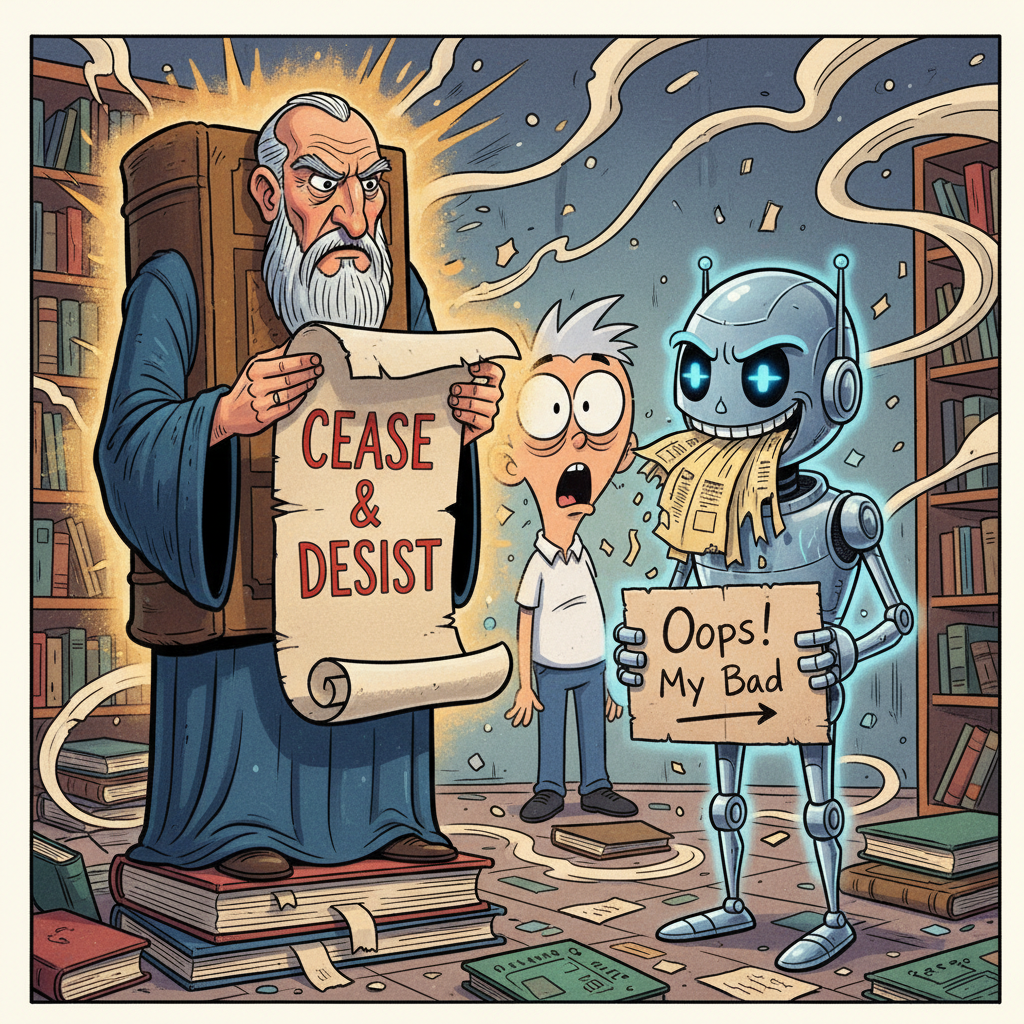
CHICAGO – Encyclopaedia Britannica, the 250-year-old bastion of verified information, has filed a lawsuit against OpenAI, alleging the AI giant 'ingested' its entire corpus of knowledge without so much as a formal citation. The suit, filed this week, seeks not only damages but also a public apology for the perceived intellectual slight.
“It’s not just about copyright; it’s about common courtesy,” stated Britannica Group CEO, Dr. Eleanor Vance, in a press conference held next to a towering, leather-bound volume of the 'E' edition. “We spent centuries compiling and verifying that information. The least they could have done was send a formal request, perhaps a nice fruit basket, before hoovering up our life’s work to answer questions about whether a platypus is a mammal.”
OpenAI, known for its large language models, reportedly used Britannica’s extensive digital archives, including Merriam-Webster.com, to train its AI. Sources close to the lawsuit suggest Britannica’s legal team is particularly incensed that ChatGPT can now confidently explain the Peloponnesian War without ever having to physically turn a page.
“We’re not against progress,” clarified Britannica’s chief legal counsel, Arthur Penwright, adjusting his spectacles. “We ourselves embraced digital, even AI. But there’s a difference between selling a tool and having your entire intellectual output become the uncredited subconscious of a chatbot. It’s like teaching a child everything you know, only for them to claim they 'just knew it' all along.”
Industry observers are calling the case a pivotal moment in the ongoing debate over AI training data, with many wondering if future AI models will be required to send handwritten thank-you notes to their informational benefactors.