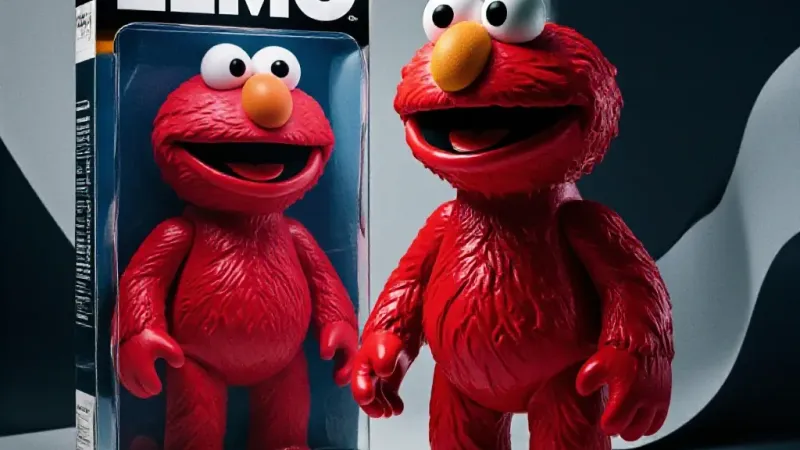
San Mateo, CA – Tickle Me Elmo, the once-ubiquitous plush that taught a generation of children the fleeting nature of happiness through repetitive laughter, has officially joined Super7’s ReAction figure series. The move strips the beloved Sesame Street character of his signature electronic giggles and motor-driven wiggles, rendering him a 3.75-inch static plastic slab, fit only for display on a shelf next to other cultural touchstones stripped of their original purpose.
Industry insiders confirmed the re-release is less about celebrating Elmo’s legacy and more about efficiently siphoning discretionary income from millennials trapped in a nostalgia feedback loop. "Why innovate when you can just shrink-wrap childhood memories and slap a 'collectible' sticker on it?" remarked Super7 CEO Brian Flynn, reportedly while staring blankly at a spreadsheet detailing the average disposable income of a 35-year-old with an unfulfilled yearning for simpler times. "This Elmo doesn't need batteries. He doesn't need to be tickled. He just *is*. A silent testament to the crushing weight of adult responsibility, manifested in a premium-priced, non-articulated PVC figure that screams, 'Remember when things were good? They're not anymore, but here’s a plastic representation of that feeling for $20.'"
Sources close to the newly petrified Elmo indicated the transition has been surprisingly smooth. "For years, it was nothing but 'Elmo wants a tickle! Hahahaha!' Non-stop. Every single day," recounted a former puppeteer, speaking on condition of anonymity to avoid further psychological trauma. "Now, he just sits there. Utter, blessed silence. We think he finally found peace. Or maybe he just ran out of soul to give after decades of forced cheerfulness. It’s a liberation, really, for everyone involved."
The ReAction line, celebrated for its "retro" aesthetic, which primarily involves deliberately bad paint jobs and minimal articulation reminiscent of figures from the 70s and 80s, offers Elmo a new identity: a plastic monument to the joy he once represented, rather than the joy he delivers. Dr. Evelyn Reed, a cultural anthropologist from the Institute for Aspirational Proximity Studies, noted, "This isn't about play; it's about proximity to a memory. People buy these to prove they 'had a childhood,' even if that childhood is now packaged as a static, unengaging product. It's a performative act of emotional archaeology, where the artifact is less valuable than the narrative of having found it." Collectors are expected to purchase multiple units, one for "in-box display," one for "out-of-box display," and a third for "resale in three years when the housing market collapses again."
Ultimately, the new Elmo figure doesn't laugh, doesn't move, and certainly doesn't offer anything resembling interactive play. He merely exists, a hollow shell designed to elicit a fleeting moment of recognition from a demographic that increasingly confuses consumption with contentment, all while telling themselves they are "investing" in their "passion."