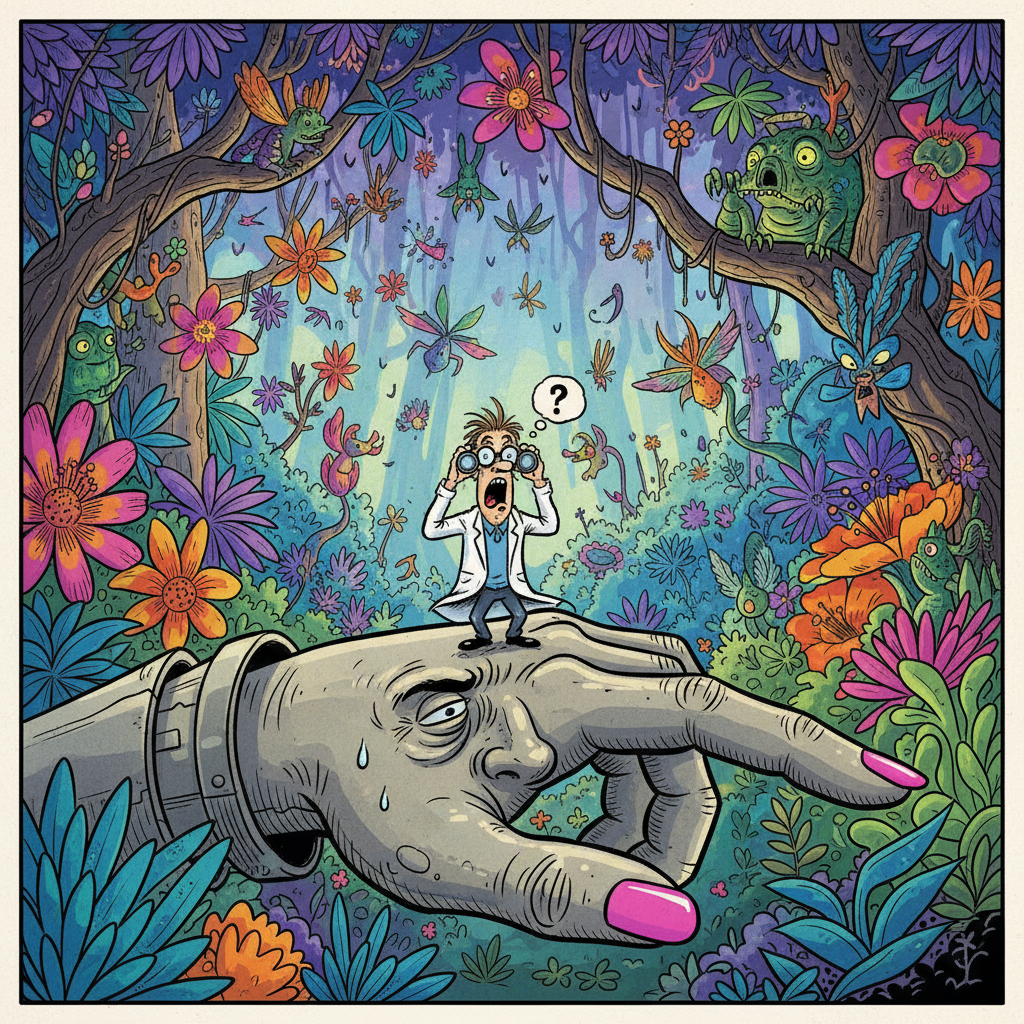
PORT MORESBY, NEW GUINEA — In a stunning blow to humanity's collective ego, two species of marsupials previously believed extinct for 7,000 years have been found alive and well in New Guinea. The discovery has prompted a global reassessment of how thoroughly we've managed to catalog and subsequently destroy all life on Earth.
“Frankly, it’s a bit embarrassing,” admitted Dr. Aris Thorne, head of the Global Extinction Tracking Initiative (GETI), from his office, which features a large whiteboard with a single, disheartening checkmark next to 'All Known Lifeforms: Accounted For.' “We had a good run thinking we knew everything, that every corner had been explored, every creature either documented or driven into oblivion. Turns out, some things just really, really don't want to be found.”
The long-beaked echidna and the New Guinea singing dog, both presumed gone for millennia, were reportedly just 'doing their thing' in a remote, mountainous region. Experts suggest their continued existence is less a testament to their resilience and more to humanity's occasional inability to poke its nose into every single crevice.
“It’s a stark reminder that even with satellites, drones, and an insatiable desire to monetize every inch of the planet, nature still holds a few surprises,” added Thorne, already dispatching teams with updated 'to-do' lists. “We’ll get them eventually. Just give us time.”
GETI is now reportedly reviewing its 'extinct' list, bracing for the possibility that the dodo might just be late for its flight.