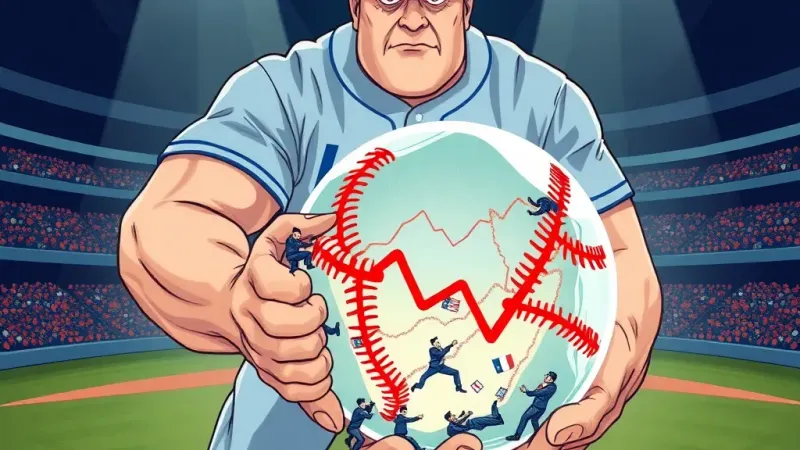
LOS ANGELES – Global financial markets experienced unprecedented volatility Monday, with indices plummeting after the Los Angeles Dodgers’ unexpected 3-2 loss to the Texas Rangers on Sunday. The defeat, which prevented a series sweep, reportedly triggered sell-offs across multiple sectors and prompted emergency closed-door meetings among central bank officials worldwide. The Dow Jones Industrial Average shed nearly 700 points within hours of Monday’s opening bell, a downturn analysts directly attributed to the outcome of the ninth inning.
"We’ve entered a new era where the emotional investment of a sports fanbase can directly translate into tangible economic indicators," explained Dr. Elara Vance, chief behavioral economist at the Institute for Market Superstition. "When a franchise like the Dodgers, assembled with the GDP of a small republic, fails to secure a predictable outcome against a lesser-capitalized opponent, the psychological impact on investors is devastating. It suggests an underlying fragility in systems we once thought immutable." Vance pointed to a 0.3% dip in global avocado futures, a commodity closely linked to Southern Californian consumer sentiment, as a primary bellwether of the post-game financial malaise. She further noted that speculative trading on Dodgers' post-season success has become so integrated into algorithmic trading platforms that any deviation from perfection triggers automatic circuit breakers designed to prevent over-optimism.
Retail sectors also reported an immediate and precipitous drop in discretionary spending, particularly in merchandise featuring the colors blue and white. "People just aren't buying anything," lamented Brenda Jenkins, manager of a popular sports apparel store near Dodger Stadium. "One loss, and suddenly no one needs a new $250 custom jersey. It's like the entire concept of hope just evaporated, taking half my quarterly revenue with it." Analysts from "Sports Analytics & Wealth Management" (SAWM) are now forecasting a potential 0.15% contraction in Q3 GDP for states bordering the Pacific Ocean, directly correlating with the Dodgers' current batting average with runners in scoring position.
The financial contagion quickly spread beyond the domestic 2. Several European and Asian markets, still reeling from the delayed revelation of the Dodgers’ mid-game strategic blunders and Roki Sasaki’s four innings of work, opened Tuesday with significant losses. International trade negotiations reportedly stalled, with delegates citing a profound lack of "optimism in the general human endeavor" following the disappointing performance, particularly concerning the global supply chain for premium sports beverages. Sources close to the Federal Reserve indicated that discussions are underway to introduce a "Fan Confidence Stabilization Fund," potentially backed by corporate sponsorships and season ticket guarantees, to prevent future athletic setbacks from cascading into full-blown global depressions. The proposed fund, tentatively codenamed 'Project Blue Heaven,' aims to inject liquidity directly into sectors most vulnerable to collective fan despair, such as luxury car dealerships and artisan popcorn vendors.
"Frankly, we’ve invested too much into this notion of competitive excellence to have it undermined by a single groundout," stated Wayne 'The Wallet' Henderson, a lifelong season ticket holder and hedge fund manager, while liquidating his position in a promising tech startup. "Every dollar I spent on that luxury box, every speculative bet on their postseason run – it all hangs on them winning. If they can’t do that, what exactly *can* we rely on anymore?"
The true cost of building a superteam, it seems, is not just the astronomical salaries, but the entire global 2 now riding on every single pitch.