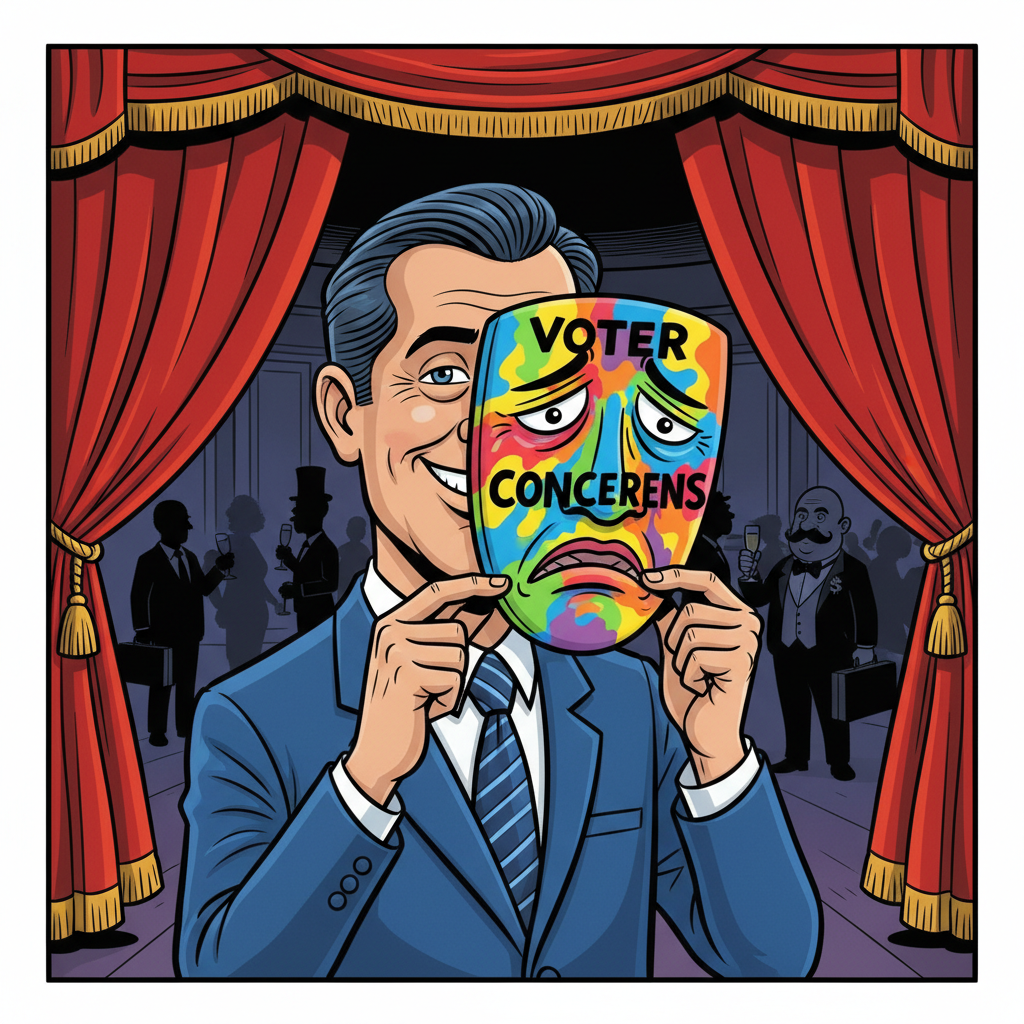
WASHINGTON D.C. – In a groundbreaking strategic pivot, the Democratic Party has announced its intention to actively acknowledge and address issues that resonate with key demographic groups, particularly ahead of crucial midterm elections. This innovative approach, dubbed 'Voter Empathy Initiative' (VEI), marks a significant departure from traditional campaign tactics.
Party strategists confirmed that the VEI was born from the radical idea that voters might be more inclined to support candidates who appear to share their concerns. "For too long, we've relied on the electorate to simply understand our nuanced, often unspoken, commitment to their well-being," explained DNC spokesperson Brenda Carmichael. "Now, we're taking the unprecedented step of actually saying it out loud, sometimes even with a concerned facial expression."
The first test of the VEI involves expressing 'profound outrage' over recent environmental deregulation, specifically targeting a segment of the electorate known as 'Moms Against Harmful Agrochemicals' (MAHA moms). "We've discovered that these mothers are, surprisingly, against harmful chemicals," Carmichael stated, adjusting her glasses. "Our internal polling shows that if we also express opposition to these chemicals, they might, and I stress *might*, vote for us."
Political analysts are divided on the long-term viability of such a radical strategy. "It's certainly a bold move," commented Dr. Evelyn Reed, a professor of electoral psychology. "However, the challenge will be maintaining this facade of genuine concern once the ballots are cast. Voters are notoriously fickle about politicians who stop caring immediately after an election."
The party is reportedly developing a comprehensive list of other issues voters care about, including affordable healthcare, economic stability, and the ability to find matching socks. Future initiatives may include 'Democrats Against Bad Traffic' and 'Democrats For Slightly Less Annoying Hold Music.' The goal is to eventually appear to care about at least 70% of the things the average American cares about, a figure strategists believe is ambitious but achievable.