
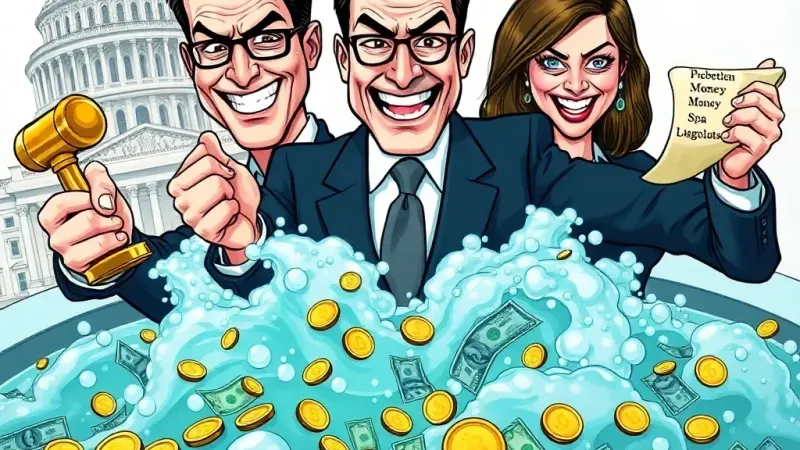
Washington D.C. — After what insiders are calling a "brief, but necessary, 2 break" from the high-stakes world of political influence, the cryptocurrency industry has officially announced its return to aggressive lobbying efforts on Capitol Hill. Digital asset firms and their associated Political Action Committees (PACs) are reportedly re-engaging with lawmakers, eager to shape future legislation following a period marked by market volatility and increased scrutiny.
The self-imposed hiatus, which began roughly 18 months ago amidst a series of high-profile bankruptcies, indictments, and the general implosion of several major exchanges, was crucial for "recalibrating our messaging and realigning our strategic narratives," according to Fiona Grayscale, Head of Government Affairs for the newly formed "Decentralized Influence Coalition." During this crucial period of reflection, Grayscale explains, many executives engaged in intensive "visioning sessions" and "synergy alignment workshops" across various luxury retreat locations, specifically designed to rebrand catastrophic financial losses as "valuable learning opportunities" and outright fraud as "unfortunate market corrections." "We needed to step back, reflect, and ensure we were approaching D.C. with a clear head and an even clearer understanding of how to best protect our existing multi-billion-dollar investments from the pesky realities of consumer protection and market stability," Grayscale stated, adjusting a lapel pin shaped like a stylized blockchain. "Our constituents—the multi-millionaire founders and early investors—deserve nothing less than a completely unhindered pathway to generational wealth, irrespective of how that might impact anyone else, or the broader financial system, for that matter."
This renewed push is expected to funnel an estimated $100 million into federal campaigns and direct lobbying over the next two election cycles, primarily targeting key committees overseeing financial services, agriculture (due to obscure commodity definitions), and technological innovation. Sources indicate that initial meetings have focused on softening proposed regulations, securing favorable tax advantages for digital asset holdings, and, crucially, ensuring that any legislative definitions of "securities" remain as nebulous as possible when applied to existing crypto tokens. They are also advocating for the creation of a special "Innovation Sandbox" that would exempt their ventures from traditional banking and financial laws for an initial period of, say, 7-10 years, or until another major crash. A spokesperson for a prominent Senate Democrat, speaking anonymously, quipped, "Honestly, we barely noticed they were gone. The money always finds its way back. It's like a highly concentrated, ethically dubious salmon run, but instead of upstream, it's straight into our campaign accounts. It’s just the natural order of things, and frankly, we’re a little behind schedule on our yacht payments."
Industry analysts suggest the "break" was less about mental wellness and more about waiting for the public’s attention to drift from the catastrophic failures of 2022 and 2023. "They essentially went into a chrysalis of denial, waiting for the news cycle to move on from 'scam' and 'fraud' to something more palatable, like 'innovation' or 'web3 opportunities for American leadership,' or even a good old-fashioned alien sighting," noted Dr. Elias Vance, a senior fellow at the Center for Transparent Governance. "Now that the buzzwords have sufficiently cleansed the public palate, and the SEC seems distracted by other shiny objects, it’s back to business as usual: ensuring a nascent, unregulated industry gets to dictate its own terms to the very bodies meant to regulate it, all under the guise of fostering economic growth that primarily benefits early adopters."
Lobbyists confirmed they are now fully recharged and ready to pivot back to insisting that cryptocurrency is the future of everything, including democracy itself, provided enough campaign contributions are made.