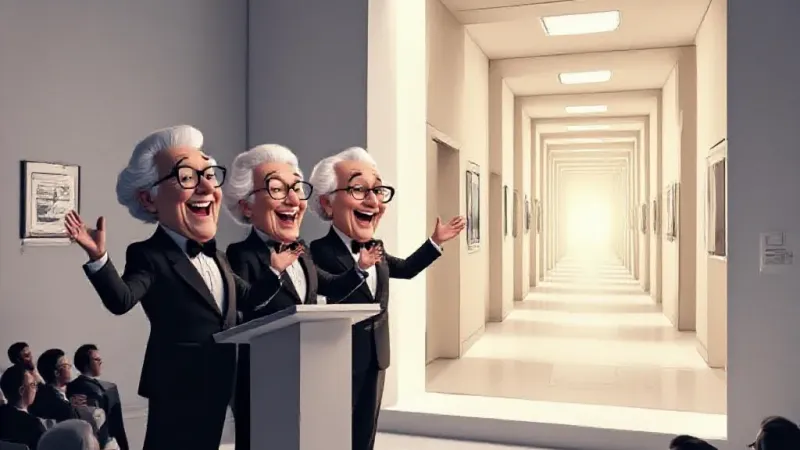
LOS ANGELES — Film critics are showering unprecedented praise on YouTube creator Kane Parsons’ debut feature, “The Backrooms,” not for its traditional horror elements, but for its uncanny ability to mirror the crushing monotony and featureless despair of modern adulthood. Reviewers, often quick to dismiss online phenomena, are calling the film’s desolate, beige corridors and endless, identical rooms "a profound allegorical masterclass" that perfectly encapsulates the current human condition.
"It's not the jump scares that terrify you," wrote Dr. Evelyn Thorne, director of the Institute for Aspirational Proximity Studies at UCLA, in a widely circulated essay. "It's the gnawing realization that every single one of us has spent countless hours in some version of these spaces — the forgotten corners of corporate campuses, the half-finished developments, the airports at 3 AM. Parsons hasn't invented horror; he's just held a mirror to the default setting of existence for anyone who’s ever had a job or tried to find a reasonably priced apartment." Thorne’s analysis suggests the film’s true genius lies in its unblinking portrayal of the spaces engineered to be forgotten, where human spirit goes to gently atrophy.
Studio executives, initially baffled by the film's success, are now scrambling to greenlight a slate of "Reality-Adjacent Liminal" pictures. "We initially thought people wanted escapism," admitted Apex Pictures CEO Brenda Chen, "but it turns out they just want validation that their daily grind is, in fact, terrifyingly bland. 'The Backrooms' validates their deep-seated suspicion that the world isn’t a vibrant tapestry, but rather a poorly lit, off-white hallway that loops endlessly." Chen added that focus groups indicated peak terror was achieved not when a creature appeared, but when a character realized the only vending machine was out of order.
The film, which started as a viral short, has reportedly triggered a mass exodus from open-plan offices and a surge in therapy appointments for individuals experiencing "corridor fatigue." Experts suggest this reaction indicates a collective awakening to the architectural gaslighting perpetuated by developers promising "community spaces" that invariably end up feeling like glorified waiting rooms for the afterlife.
Ultimately, "The Backrooms" forces viewers to confront the most terrifying truth of all: the monsters are optional. The real horror is the stark, unadorned environment we’ve built for ourselves, where the promise of a brighter future is just another flickering fluorescent light down a perpetually echoing hall.