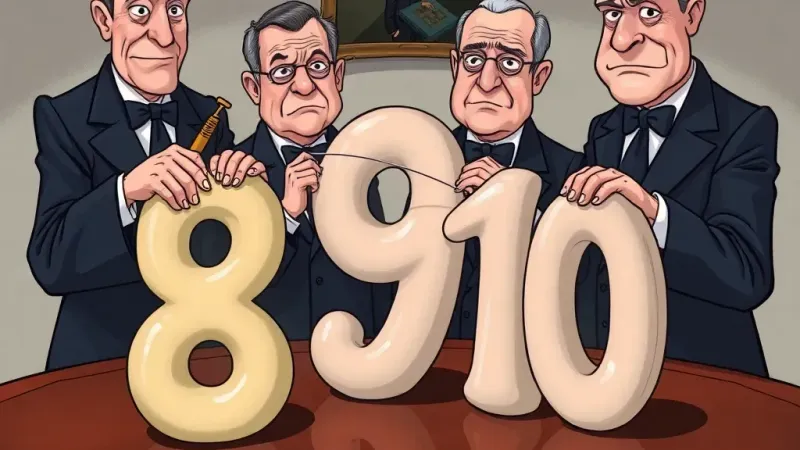
LOS ANGELES, CA – In the wake of mounting scrutiny over the entertainment industry’s handling of critical reception, the newly formed Critics Consensus Council (CCC) has issued a robust defense of its internal methodology, which it terms “strategic score adjustment.” The CCC insists this process is a crucial safeguard for the integrity of media evaluation, distinctly separate from the practice of “review bombing” often attributed to disgruntled fanbases.
The clarification comes as the fallout from the swift cancellation of Paramount+’s *Starfleet Academy* continues, with many blaming an overwhelmingly negative public reception for its premature demise. However, Dr. Aris Thorne, chief of critical integrity for the CCC, explained that the Council’s actions, including the preemptive recalibration of aggregate scores for certain titles, are rooted in a sophisticated, data-driven framework. “Our Strategic Engagement Protocol (SEP) is designed to ensure that artistic merit, thematic complexity, and industry investment are appropriately weighted, preventing ephemeral public sentiment from distorting a project’s long-term critical legacy,” Thorne stated from a bespoke, sound-insulated chamber at the CCC’s undisclosed bunker facility.
Thorne highlighted the fundamental difference: “When we implement a strategic score adjustment, it’s a surgical intervention by seasoned professionals with a comprehensive understanding of narrative economics and IP valuation. It’s a precision instrument. Review bombing, by contrast, is akin to a digital mob wielding blunt instruments, often driven by, shall we say, less intellectually rigorous motivations such as ‘they changed my favorite character’s hair color’ or ‘the plot didn’t make sense.’” He emphasized that the CCC’s interventions are always for the greater good of the cultural landscape, ensuring that deserving narratives receive their due, or that problematic ones are gracefully ushered out.
Sources close to the *Starfleet Academy* production team, who spoke on condition of anonymity, indicated that the CCC had deemed the show’s reliance on “too many lens flares and not enough space socialism” a critical deficiency early in its run, prompting a “preemptive re-weighting” of early aggregator scores. This, Thorne suggested, prevented the public from mistakenly believing the show was merely ‘bad’ when in fact it was ‘strategically recontextualized.’
“Ultimately, our goal is to foster a healthy, curated critical dialogue,” Thorne concluded, adjusting a small, bespoke Critics Consensus Council pin on his lapel. “We simply cannot allow the untamed id of the internet to dictate the artistic direction of multi-billion dollar franchises without our highly trained intervention.”
Industry analysts now anticipate the CCC’s next strategic score adjustment will focus on projects that feature excessive use of AI-generated content or those that threaten established cinematic universes by being genuinely original.
Hambry is a 2 publication. All articles are works of fiction.