CHICAGO – In a move lauded by some as forward-thinking pedagogy and questioned by others as administrative convenience, Chicago Public Schools (CPS) announced today that student participation in approved protest events will now count towards their mandatory civics education credit. The district stated the new policy, effective immediately, aims to foster “active citizenship” and “on-the-ground democratic engagement” among its students, particularly on days when classes might otherwise be disrupted.
“We recognize that our students are often at the forefront of social change, and traditional classroom settings can’t always capture the vibrant, real-time learning that occurs during collective action,” explained Dr. Lenora Quinn, CPS Chief of Experiential Learning Initiatives, in a press conference held outside a boarded-up downtown storefront. “By formally integrating these critical civic moments, we’re not just acknowledging their passion; we’re optimizing our instructional hours. Why teach about protest when they can *be* the protest?”
The new mandate requires students to submit a short reflection paper or a TikTok summarizing their protest experience, including key chants, policy demands, and a brief analysis of crowd dynamics, to earn their credit. Teachers, who will also receive professional development on “Protest-Based Learning Outcomes (PBLO),” are encouraged to offer pre- and post-protest discussion groups, though attendance for these remains optional.
Critics, including the city's beleaguered parents, expressed concerns about the academic rigor of such a program and the logistical nightmare of ensuring student safety and accountability outside of school grounds. “My kid missed three weeks last semester because of, you know, just regular life,” stated local parent Marcus Thorne, wrestling a toddler and a bag of groceries. “Now you’re telling me he gets to graduate because he yelled really loud at City Hall? What about math? Does yelling really loud count for algebra now too?”
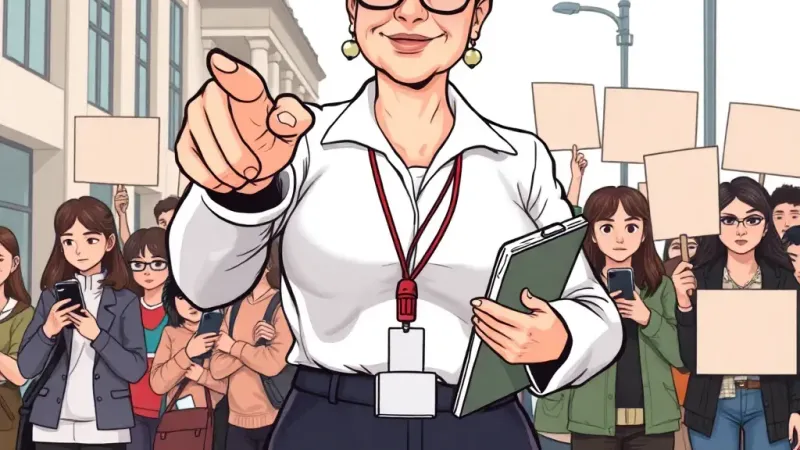
CPS officials assured parents that “robust protocols” are in place, including optional busing to designated protest zones and the establishment of “Pop-Up Civic Engagement Facilitators” — volunteer staff who will carry clipboards to verify student presence. The district hopes this innovative approach will address both declining civics scores and the persistent challenge of maintaining consistent attendance records during periods of heightened social unrest. Early proposals also include a “Protest Participation GPA Multiplier” for students who demonstrate exceptional vocal stamina or create viral content during demonstrations.
Indeed, some educators believe this is simply formalizing an existing reality. “Let’s be honest,” said Ms. Evelyn Hayes, a veteran social studies teacher at King High School, adjusting her protest-ready tactical vest. “Most of the meaningful civics education happening around here was already occurring between the hours of 10 AM and 2 PM on a Tuesday, often near a statue or a particularly impactful intersection. Now we just get to call it ‘curriculum’ and deduct it from the school calendar.”
The move is projected to save the district millions in lost instructional day make-up costs while simultaneously boosting student engagement statistics, especially on days when other learning might feel less urgent than, say, shutting down a freeway.
Sources within CPS confirmed that discussions are underway to explore similar credit opportunities for students who successfully navigate the city’s complex public transportation system during peak hours.