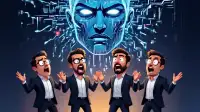
WASHINGTON D.C. — Facing what industry analysts describe as a "critical humor deficit," the newly formed National Comedy Board (NCB) announced a sweeping initiative to "Find The Funny," deploying cutting-edge artificial intelligence and a nationwide network of laugh-detection sensors. The multi-billion-dollar effort, backed by major streaming platforms and live venue consortiums, seeks to scientifically pinpoint and cultivate comedic material that resonates across an increasingly fragmented and humor-averse populace. The board estimates that raw comedic energy has plummeted by 73% since 2007, directly correlating with a 68% rise in online comment section rage.
"For too long, we've relied on organic, unstructured funny, and frankly, it's just not sustainable anymore," stated Dr. Amelia Vance, chief humor strategist for the NCB, during a press conference streamed exclusively to premium subscribers of the "LOL-MAX" platform. "Our research indicates that the average American now only experiences 0.7 genuine, involuntary laughs per week outside of curated online content. This is a crisis. We're talking about a fundamental breakdown in societal cohesion if people can't even agree on what's amusing." Dr. Vance added that initial trials of their "Humor Harvest" program, which uses predictive modeling to identify emerging low-risk joke topics, yielded promising results, with algorithms successfully identifying 14 uncontroversial observational jokes about airport security and three new permutations of "what's the deal with...?" premises.
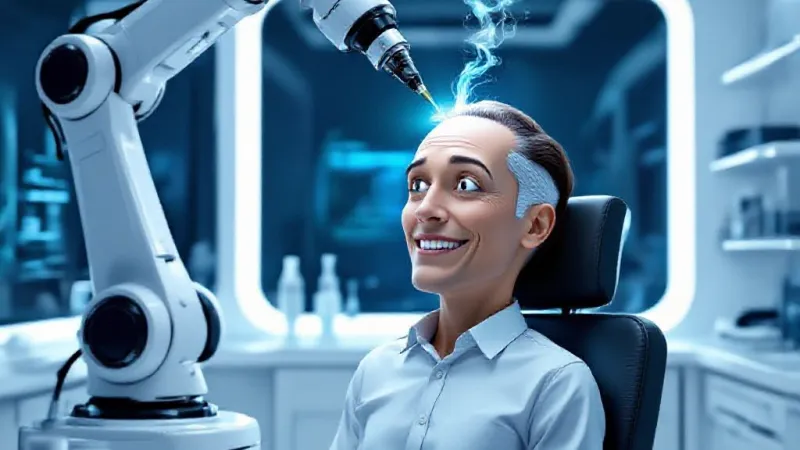
The "Find The Funny" deployment involves specialized 'JokeBots' equipped with advanced natural language processing and emotional resonance detectors, designed to scan social media, public forums, and even anonymized private group chats for nascent comedic concepts before they are "corrupted by over-analysis or viral outrage." These JokeBots, developed in partnership with Google's DeepMind subsidiary and a consortium of behavioral psychologists from the University of Phoenix, are already operating in 37 test markets, including Boise, Idaho, and several suburban Philadelphia cul-de-sacs. Data collected—which includes micro-expressions and pupil dilation via opt-in facial recognition technology at participating venues—will then be fed into a central "Punchline Predictor" AI, which will generate a weekly "Safe Laugh Index" for touring comedians and content creators.
Veteran comedian Stan "The Standup" Kowalski, who has toured continuously since the mid-90s, expressed cautious optimism. "Look, back in my day, you just talked about your mother-in-law or airline food, and people laughed. Now? You mention a plane, someone's offended about emissions. You mention food, someone's triggered by gluten," Kowalski said, adjusting his specially designed "Audience Mood Tracker" wristband, which glows green for 'amused' and an alarming red for 'potentially litigious.' "It's a minefield. If this AI can just tell me what 10 seconds of my act won't get me death threats on TikTok, I'm all for it. I just want to make a living without inadvertently canceling myself over a bit about squirrels asking for bitcoin."
Industry insiders suggest that if the initiative proves successful, the NCB plans to license patented "Funny-as-a-Service" joke packages to corporate team-building facilitators and local politicians struggling to appear relatable, eliminating the need for expensive, risky human joke writers. The ultimate goal, according to Dr. Vance, is to build a "sustainable funny economy" where humor is a predictable, managed resource, ensuring no American ever has to stumble upon a genuinely surprising laugh again, thereby preserving valuable cognitive load for optimized content consumption.