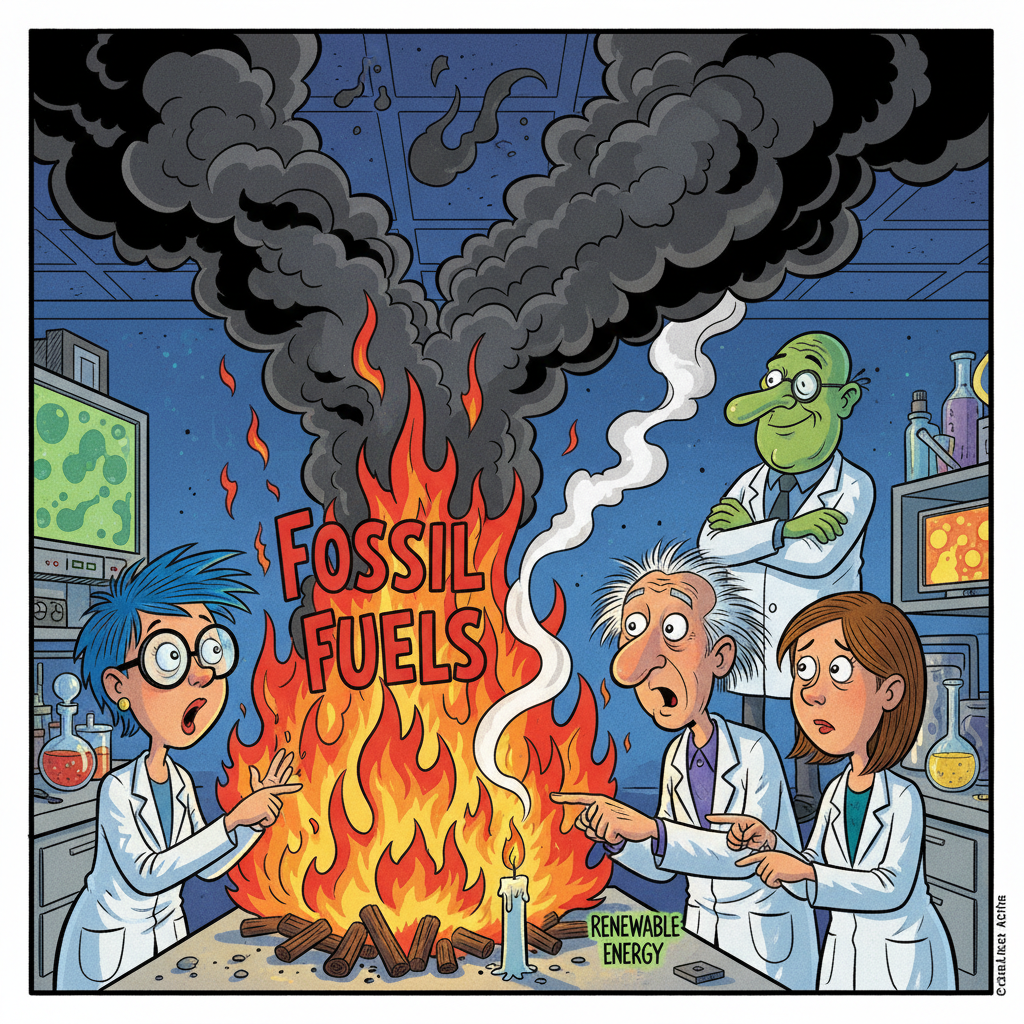
WASHINGTON D.C. — A consortium of leading climate scientists announced today a monumental discovery: the timing and intensity of wildfires are not uniform across all landscapes. Their multi-year study, published in the prestigious journal *Nature’s Obvious Observations*, revealed that factors such as vegetation type, moisture levels, and wind patterns can significantly alter when and how a forest burns.
“For years, we’ve operated under the assumption that all fires are created equal, ecologically speaking,” stated Dr. Evelyn Thorne, lead researcher and recipient of the 'Most Astounded by the Self-Evident' award. “But our data clearly indicates that a dry pine forest in California behaves differently than a damp boreal forest in Canada when exposed to extreme heat. It’s truly revolutionary.”
The study, which cost an estimated $47 million in taxpayer funds, involved deploying advanced sensors to observe active wildfires and conducting controlled burns in meticulously replicated ecosystems. Researchers were reportedly shocked to find that areas with more flammable material tended to burn more readily, and that rain often had a dampening effect on flames.
“We’re now exploring the radical hypothesis that perhaps, just perhaps, the presence of water might inhibit fire spread,” Dr. Thorne added, her voice barely concealing her excitement. “The implications for firefighting strategies could be enormous, assuming our preliminary findings hold up to further scrutiny.”
Critics of the study, largely comprised of people who have ever seen a campfire, questioned the necessity of such extensive research to confirm what many consider basic physics. However, Dr. Thorne emphasized the importance of empirical data. “It’s one thing to *think* something is true, it’s another to have a peer-reviewed, heavily funded study confirm it.”
The next phase of research will reportedly investigate whether objects tend to fall downwards when dropped.