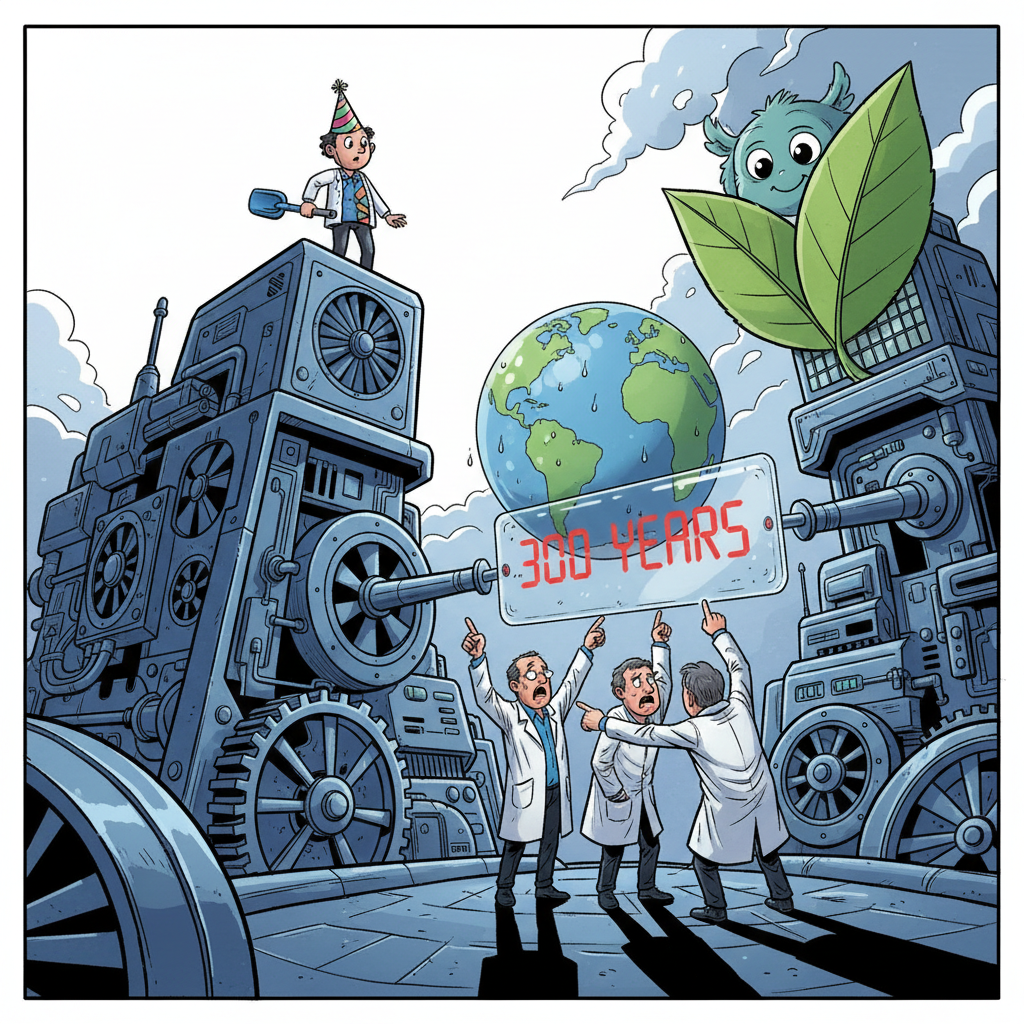
GENEVA, SWITZERLAND – A pair of groundbreaking studies released this week have confirmed what many suspected: humanity’s current climate goals are laughably insufficient. Researchers from two distinct fields independently concluded that achieving 'net zero' emissions is merely a quaint pit stop on the highway to environmental catastrophe, and that centuries of aggressive carbon removal are actually required.
“We’ve been telling everyone to stop adding to the problem, which is a good first step, like telling a drowning person to stop chugging water,” explained Dr. Evelyn Reed, lead author of one study. “But what we really need them to do is start actively un-chugging, for a very, very long time. And preferably, they should have started yesterday.”
The studies, published in prestigious journals, highlight the need for “sustained net-negative CO₂ emissions for centuries,” effectively meaning humanity must not only cease polluting but also actively reverse the damage for generations. This involves deploying technologies that currently exist mostly in PowerPoint presentations and venture capital pitches, at a scale previously reserved for sci-fi blockbusters.
“Think of all those corporate pledges for 'net zero by 2050,'” mused environmental policy analyst Mark Jensen, who was not involved in the studies but enjoys a good ‘I told you so.’ “Turns out, that’s like promising to stop punching a hole in the boat after it’s already half-submerged. We need to start patching, bailing, and maybe inventing a reverse-water-spout machine.”
Experts now suggest that the global community shift its focus from merely reducing emissions to developing entirely new ways to make the planet forget we ever existed. The next climate summit is expected to feature panels on 'Atmospheric Vacuum Cleaners: A Realistic Timeline' and 'Oceanic Carbon Sponges: Where to Put All the Gunk?'