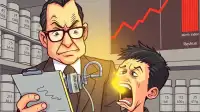

Global initiatives to implement age verification for online content, ostensibly aimed at protecting minors, have been hailed by government officials and tech industry leaders as an unforeseen triumph for digital accountability. While public discourse focuses on shielding children from inappropriate material, internal assessments suggest the real breakthrough is the unprecedented ability to link every online persona directly to a verifiable real-world identity, finally eradicating the pesky problem of anonymous speech.
“Honestly, we were just trying to keep little Timmy from seeing boobies,” chuckled a senior Department of Digital Oversight official, speaking anonymously for fear of public candor. “But what we got was a golden key to every keyboard warrior and basement pundit on the planet. Turns out, once you ask for a driver’s license to watch a cartoon, asking for it to post a manifesto against property taxes isn’t much of a leap. The infrastructure being built now, ostensibly for parental controls, is remarkably robust for mapping dissenting opinions to specific IP addresses, credit card data, and even voting records.” The official added that the cost-effectiveness of leveraging child protection for broader societal control was a "happy accident."
A spokesperson for “SafeNet Global,” a consortium of tech giants developing the new verification protocols, praised the “holistic approach to digital citizenship.” They emphasized the streamlined process for platforms to identify users who engage in “problematic speech,” making it easier to enforce community guidelines, or, as one leaked internal memo described it, "silence designated nuisances with surgical precision." The new systems, designed to confirm age without revealing specific personal data *to the content provider*, nonetheless provide a clear, one-to-one identifier for authorities upon request, bridging the long-standing gap between online anonymity and real-world consequences. This means every comment, every upvote, and every share can be meticulously tracked back to a single, identifiable individual.
“Think of it as a global digital driver’s license, but instead of just proving you’re old enough to drive, it proves you’re old enough to be held fully responsible for that 3 AM rant about the local mayor’s questionable zoning decisions,” explained Dr. Evelyn Reed, director of the Institute for Aspirational Proximity Studies. “The implications for ensuring ‘responsible’ online behavior, particularly from those who previously hid behind avatars, are simply profound. No more anonymous hate speech, no more unverified criticisms of public policy, and definitely no more ‘just asking questions’ when those questions lead to uncomfortable truths. Just good, clean, attributable engagement, perfect for our increasingly transparent society.” She concluded by noting the system’s unparalleled efficiency in flagging "potential disruptors" for "proactive engagement."
The kids might be marginally safer online, but your future attempts to anonymously complain about your regional power grid or that weird smell from your neighbor’s garage are now officially toast.