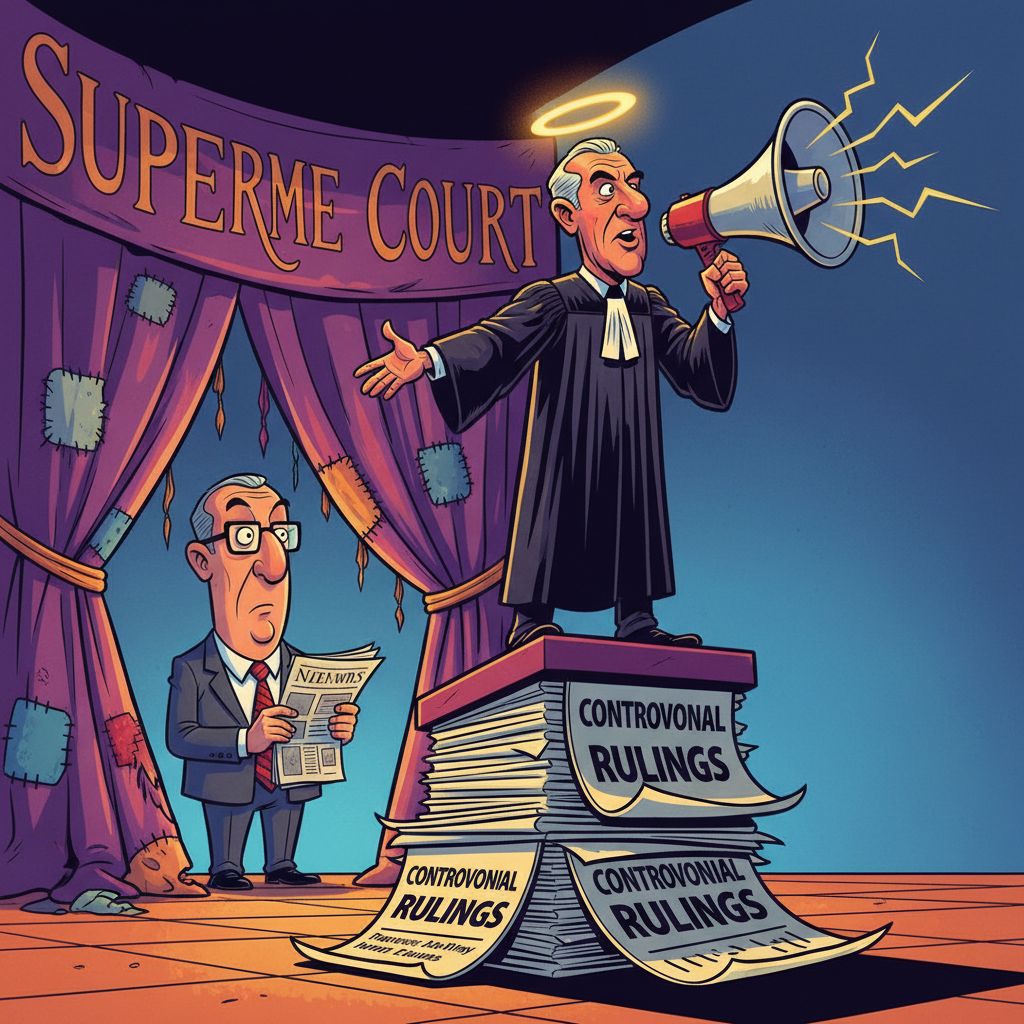
WASHINGTON D.C. — Chief Justice John Roberts has once again garnered widespread acclaim for his unwavering commitment to judicial independence, particularly when speaking about it. The Chief Justice’s consistent and eloquent pronouncements on the judiciary’s non-political role have been a beacon of consistency, especially in contrast to the court’s actual rulings.
“It’s truly inspiring to hear the Chief Justice articulate the foundational principles of our legal system, even if the outcomes sometimes suggest those principles are more of a suggestion than a rule,” stated Dr. Evelyn Reed, a professor of Constitutional Performance Art at Georgetown University. “His ability to separate the rhetoric from the reality is a masterclass in institutional self-preservation.”
Legal scholars note that Roberts’s impassioned pleas for an apolitical judiciary often precede decisions that are, by all appearances, deeply political. “It’s like a magician telling you how the trick works, but then doing a completely different trick right after,” explained legal analyst Kenji Tanaka. “He’s not just defending the court; he’s performing a public service by reminding us what judicial independence *should* look like, even if we rarely see it in practice.”
When asked about the perceived disconnect, a Supreme Court spokesperson, who requested anonymity to speak freely, simply stated, “The Chief Justice believes in the power of words. And also, the power of a 5-4 majority.”