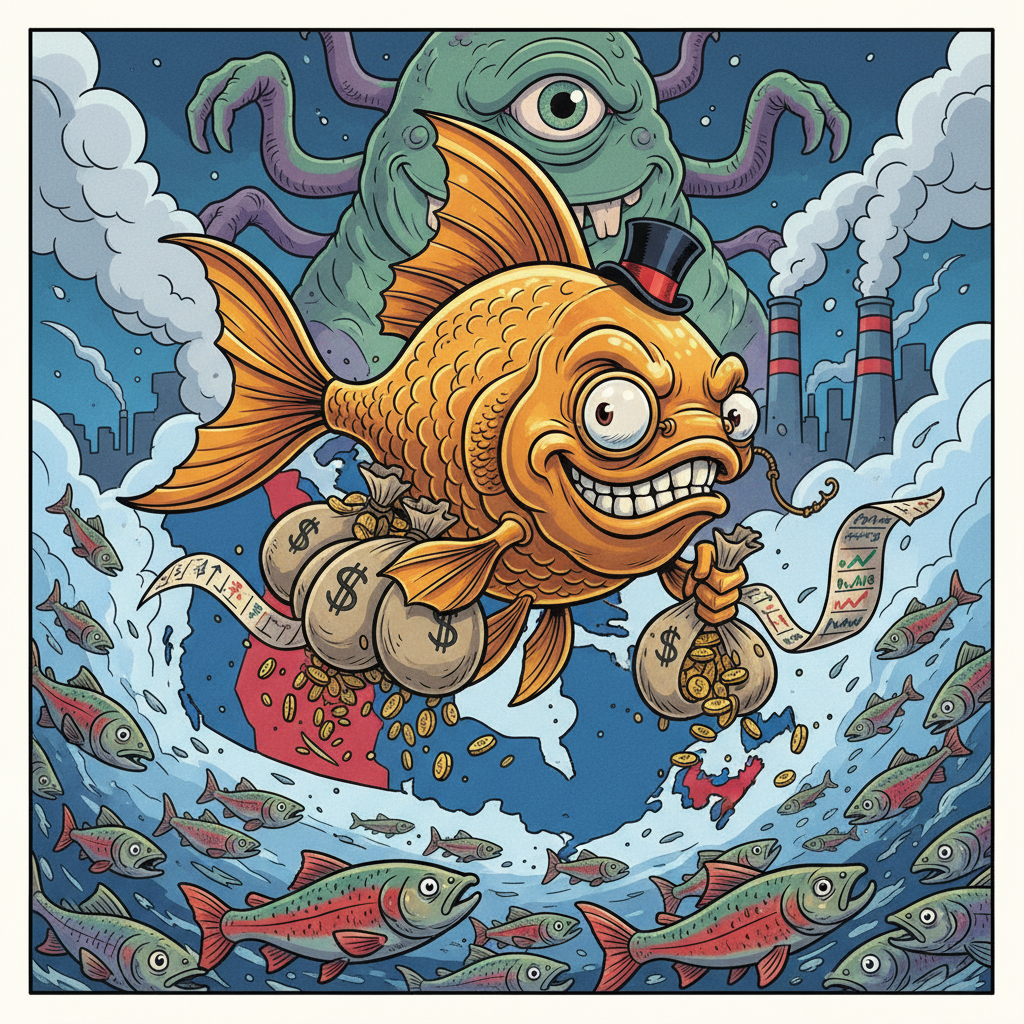
OTTAWA – Canadian environmental authorities are reportedly shifting their focus from ecological damage to economic disruption as feral goldfish populations surge across the nation's waterways. What began as a concern over invasive species is now escalating into fears that the rapidly multiplying fish are forming sophisticated financial networks, cornering the market on pond algae futures.
“Initially, we were worried about them eating all the bugs,” stated Dr. Finnegan Scales, head of the newly formed Department of Aquatic Fiscal Oversight. “But then we started seeing organized schools of goldfish pushing out smaller, less aggressive species from prime feeding grounds, followed by what appeared to be complex foraging strategies that maximized nutrient intake while minimizing energy expenditure. It’s basically venture capitalism, but underwater.”
Reports from several provinces indicate that the goldfish, often released by well-meaning but ultimately destructive pet owners, are not merely surviving but thriving, growing to unprecedented sizes and exhibiting behaviors consistent with a highly adaptable, resource-exploiting entity. One anonymous biologist described witnessing a particularly large goldfish “negotiating” with a beaver over dam construction rights, though specifics remain unconfirmed.
“We’ve tried everything – netting, electrofishing, even introducing predatory pike,” Dr. Scales added, adjusting his tie. “But they just seem to absorb our efforts, convert them into biomass, and then use that biomass to fund further expansion. We may soon have to recognize them as an official, albeit tiny, corporate entity.”
The Canadian government is now exploring options, including a potential bailout for native fish species, or, more controversially, offering the goldfish a seat on the national banking board.