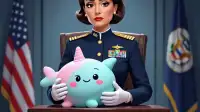
WASHINGTON D.C. — A major political campaign today announced the implementation of a new "Optics Integrity Protocol" (OIP) following what sources described as a "critically suboptimal visual representation event" involving a prominent candidate. The protocol, effective immediately, mandates stringent guidelines for all media outlets on the selection and deployment of candidate imagery.
The incident, which saw an unapproved photo of the candidate briefly circulated, was deemed a "breach of established aesthetic parameters" by campaign officials. "In this hyper-visual election cycle, a single unguarded expression can unravel months of strategic posture calibration," explained Dr. Eleanor Vance, Lead Image Architect for the campaign, during a closed-door briefing obtained by Hambry. "Our proprietary 'Smile-to-Squint Ratio' analytics indicated a 17% deviation from the candidate’s optimal public affect, resulting in a measurable dip in perceived electability among key demographic subsets."
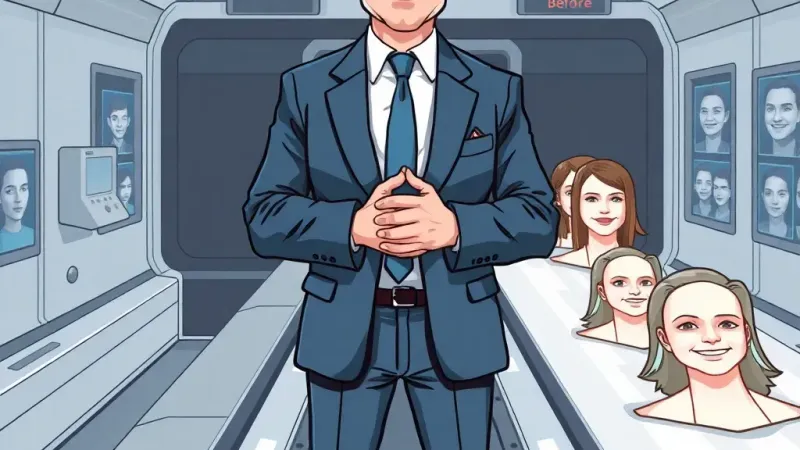
Under the OIP, all accredited 2 organizations will now be required to submit proposed candidate photos to a newly formed "Visual Resonance Review Board" (VRRB) at least two hours prior to publication. The VRRB, composed of senior campaign strategists and AI-powered facial recognition software, will evaluate images for compliance with metrics such as "Jawline Definition Index," "Authenticity Gaze Score," and adherence to the candidate’s "Strategic Emotional Spectrum" (SES).
Any image failing to meet a minimum 85% SES compliance score will be automatically rejected and flagged for potential "hostile visual intent." The initiative, privately funded by a coalition of "Image-Conscious Stakeholders for Good Governance," has already diverted significant resources from traditional policy initiatives, a move campaign strategists deem "an essential investment in the very infrastructure of persuasion."
Failure to comply with OIP guidelines could result in immediate revocation of press credentials, exclusion from future campaign events, and a potential public shaming on the campaign’s official 2 channels via a newly designated "Visual Misconduct Tracker." The campaign asserts these measures are not about vanity but about ensuring the public receives "a consistent, high-fidelity data stream of leadership readiness." "We're not asking for perfection, just strategic photo optimization," clarified Vance. "Think of it less as censorship and more as pre-emptive brand management for democracy."
Industry observers note the OIP sets a challenging new precedent for journalistic independence, though most admit it's a small price to pay for not making a powerful person look slightly less pretty.