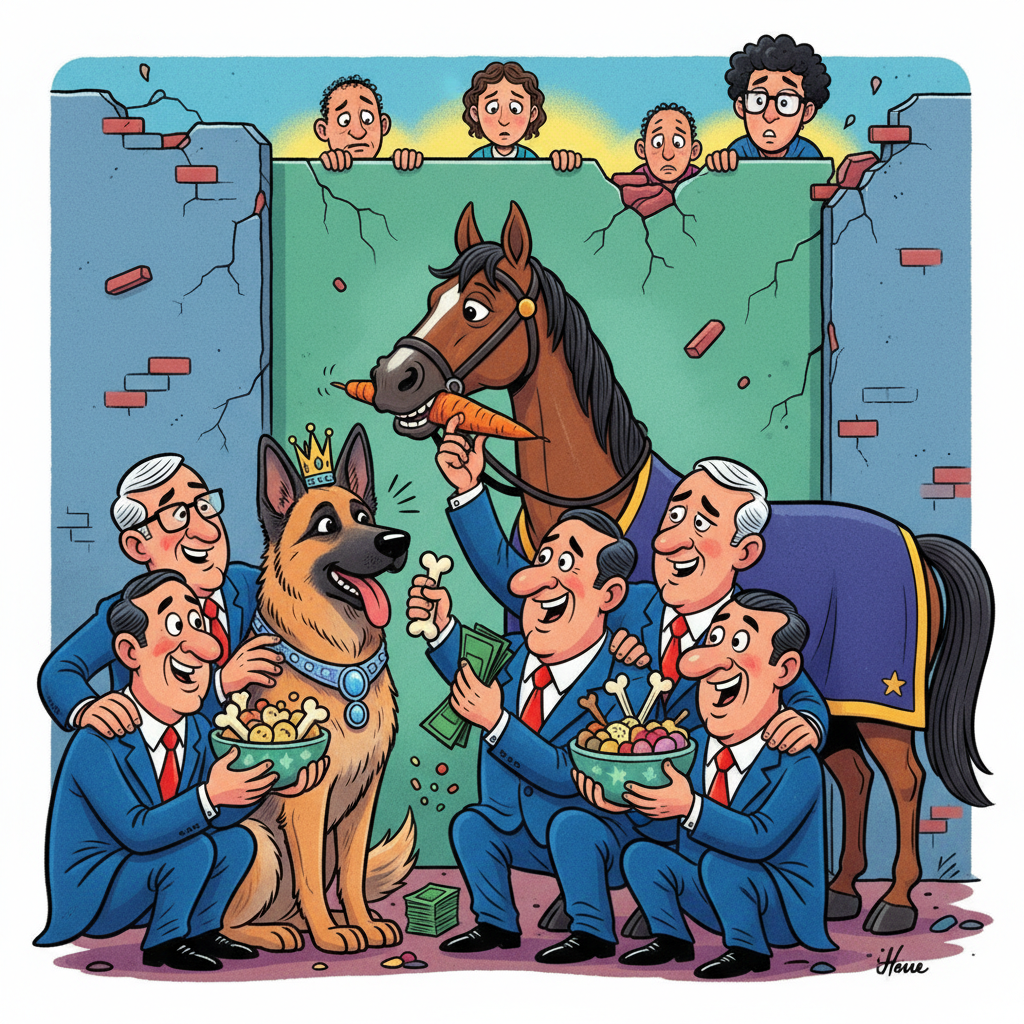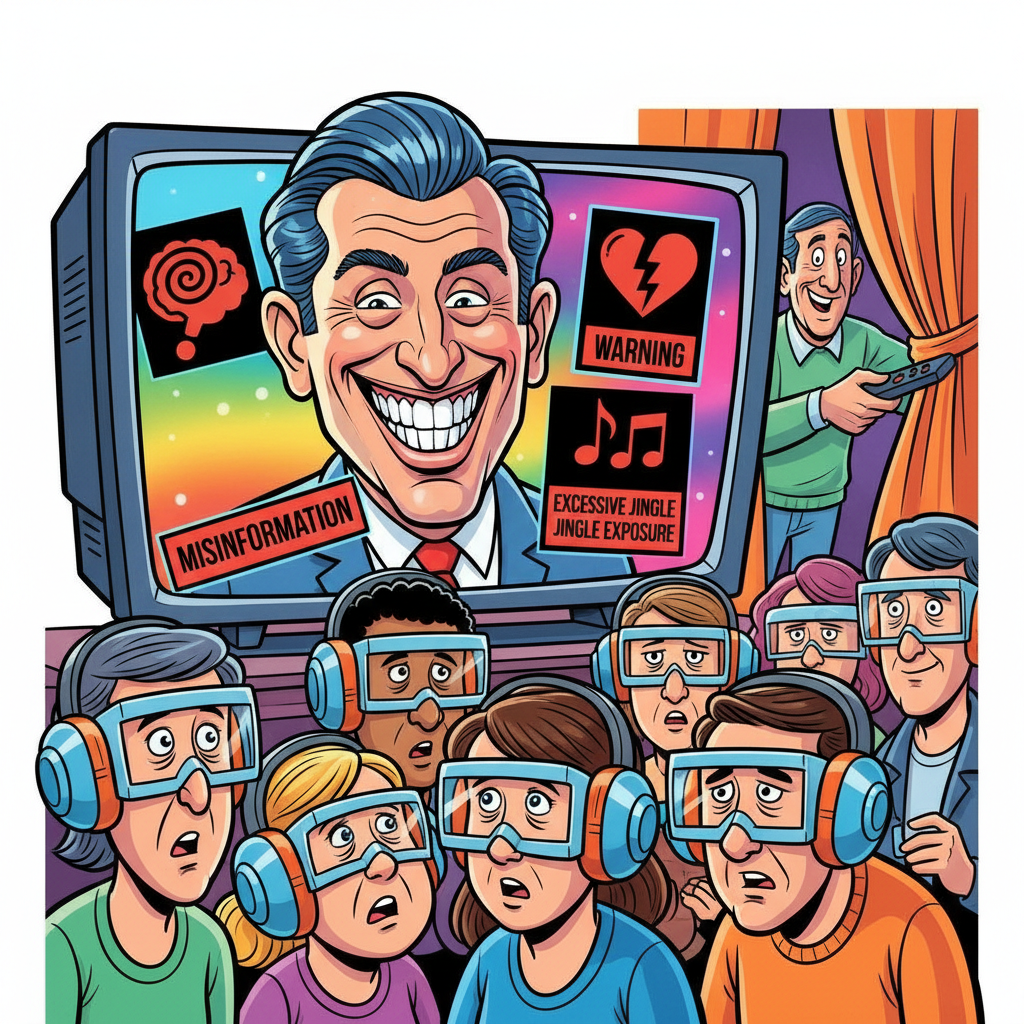
WASHINGTON D.C. — In a bipartisan effort to safeguard the nation's collective sanity, Congress has quietly passed legislation requiring all political campaign advertisements to carry explicit warning labels. The move comes amidst growing concerns over the ads' documented effects on voter morale and cognitive function, particularly during high-stakes judicial races.
The new mandate, effective immediately, will see every TV, radio, and digital ad prefixed with a prominent disclaimer such as: 'WARNING: This content may contain highly selective facts, unsubstantiated claims, and/or imagery designed to evoke strong, often irrational, emotional responses.' Other labels include 'MAY CAUSE ACUTE TRUTH DECAY' and 'PROLONGED EXPOSURE MAY LEAD TO CYNICISM AND A GENERAL DISTRUST OF HUMANITY.'
“For too long, we’ve treated political advertising as harmless, like a sugary snack for your brain,” stated Senator Eleanor Vance (I-ME), co-sponsor of the bill. “But the science is clear: constant exposure to carefully curated half-truths and fear-mongering can have serious side effects, including cognitive dissonance, premature eye-rolling, and an inability to distinguish between a Supreme Court candidate and a used car salesman.”
Campaign strategists are reportedly scrambling to adapt. “It’s a challenge, yes,” admitted veteran ad-maker Mark 'The Maestro' Thompson, whose firm specializes in turning complex policy into 30-second soundbites involving ominous music and grainy black-and-white photos. “How do you effectively demonize your opponent when the viewer is being told, in bold letters, that you’re probably just trying to demonize your opponent?”
Early focus groups indicate that while voters appreciate the transparency, many are now simply muting their televisions and waiting for election day to randomly select a name, citing the warning labels as confirmation that all options are equally suspect.