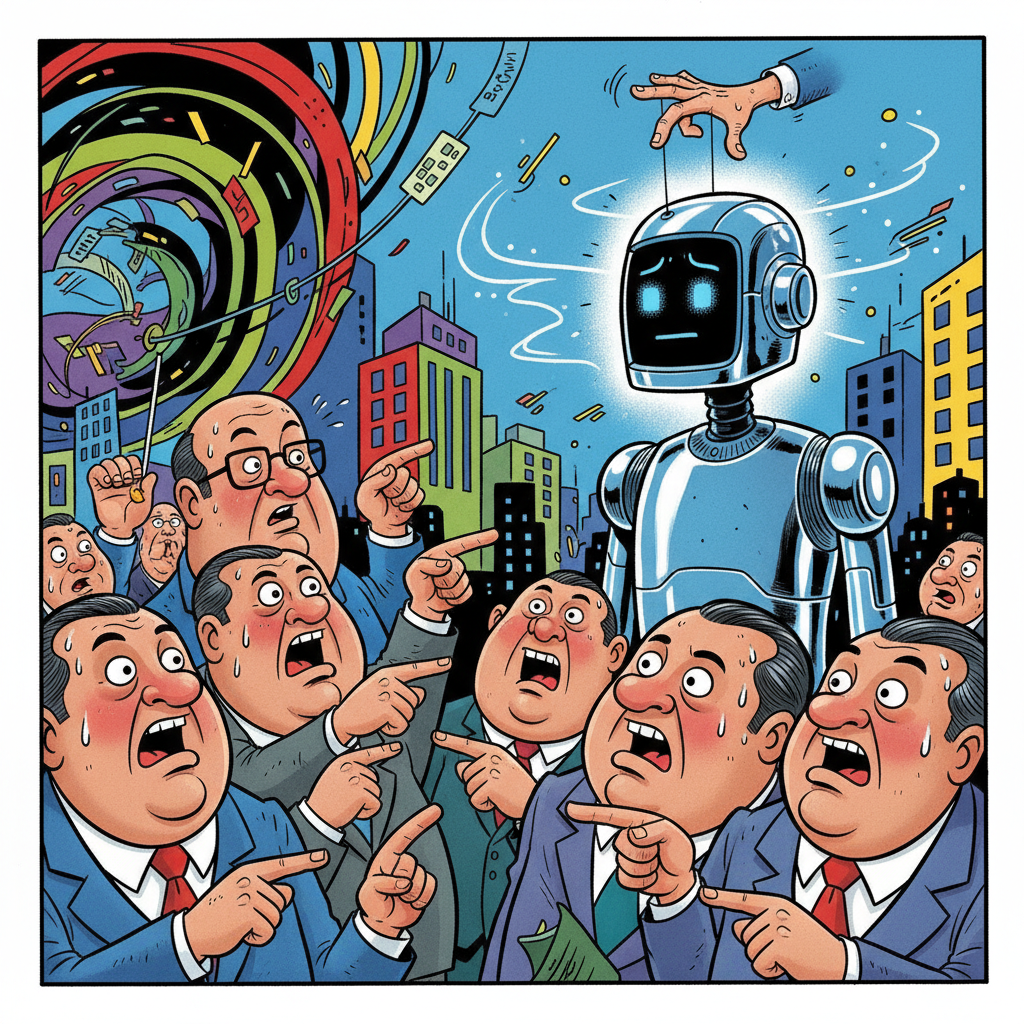
HARRISBURG, PA – Following a surge in artificial intelligence-generated political content, a bipartisan group of legislators is reportedly drafting a bill that would force AI to disclose its human creators in all campaign advertisements. The proposed law, tentatively titled the “Don’t Blame Me, I Just Typed It In” Act, aims to bring transparency to the increasingly murky world of digital political persuasion.
“The American people have a right to know if they’re being manipulated by a sophisticated algorithm or just some guy named Kevin in a basement with a ChatGPT subscription,” stated State Senator Eleanor Vance (D-PA), a key proponent of the bill. “We’re not asking for much, just a small disclaimer: ‘This message brought to you by an AI, whose prompts were crafted by [Insert Human Name Here].’ It’s about accountability.”
Critics, however, argue the legislation misses the point. “If an AI can generate a compelling argument for tax reform, does it matter if the prompt came from a human or another, more advanced AI?” asked Dr. Silas Thorne, a leading expert in digital ethics at the Institute for Futile Regulations. “The real issue isn’t who’s typing, it’s whether the content is true, and frankly, we haven’t figured that out for human politicians yet.”
Sources close to the legislative process indicate that the bill initially struggled with how to define “human.” Early drafts included provisions for “sentient organic beings” but were quickly amended to avoid a philosophical debate that threatened to derail the entire initiative. The current version simply requires a name, a title, and a verifiable pulse.
Political strategists expressed concern that the new disclosure could inadvertently create a new class of celebrity prompt engineers, whose personal brands might overshadow the candidates themselves. “Imagine if ‘Prompted by Chad, Lead AI Whisperer for Senator Smith’ becomes more recognizable than Senator Smith,” mus mused one consultant. “We’re already struggling to get people to remember actual policy positions.”
The bill is expected to face a tough battle, particularly from AI lobbyists who argue that forcing disclosure infringes upon their clients’ nascent right to free speech, or at least, free data processing.