


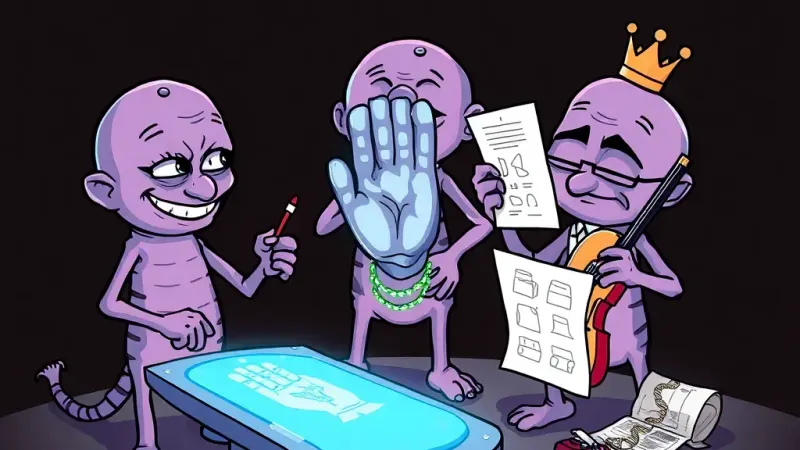
BRISTOL, UK — After eons of quietly replicating genetic material with dutiful precision, the molecular machines responsible for copying our DNA have reportedly been caught expressing themselves. A groundbreaking study from the University of Bristol has confirmed what many rogue biologists long suspected: DNA polymerases, the very engines of heredity, engage in extensive, intricate "doodling" during their daily grind, generating entirely novel and often surprisingly elaborate genetic sequences.
The findings, published this week in *Nature's Little Secrets*, indicate that these cellular workhorses, operating in the unseen depths of our biology, are not merely mindless copy machines. Instead, they demonstrate an unexpected capacity for what researchers are calling "spontaneous genomic ornamentation," ranging from polygenic floral motifs to cryptic molecular limericks, all previously dismissed as "junk DNA" or mere transcription errors. The study claims this creative impulse, fueled by what lead researcher Dr. Aris Thorne describes as "unimaginable cosmic boredom," can now be steered and controlled.
"We've spent decades studying these magnificent machines, thinking they were just following instructions," Dr. Thorne explained during an online press conference from his home lab, flanked by a whiteboard covered in what appeared to be cellular flowcharts interspersed with stick figures. "Turns out, they've been doing little creative projects on the side, like a call center employee writing fanfiction. We just massively underestimated the internal lives of biological systems. They’re basically tiny, incredibly bored artists with an infinite canvas and an 2 of repetitive tasks."
The implications for bioengineering are, predictably, being hailed as "revolutionary." Scientists are now exploring methods to harness this inherent cellular creativity, moving beyond mere gene editing to what some are calling "assisted genomic authorship." Early experiments involve providing polymerases with specific "mood music" or "motivational snacks" (complex sugars) to influence their designs. The ultimate goal is to generate bespoke genetic sequences for everything from personalized cellular art to designer microbial communities, or even—optimistically—entirely new species, primarily for aesthetic purposes.
"Imagine a bespoke liver cell, not just performing its function, but also elegantly expressing a tiny, self-replicating haiku in its mitochondrial DNA," mused Dr. Evelyn Reed, head of the Bio-Aesthetic Ethics committee, during a virtual panel. "The market for 'personalized genomic expression' will be astronomical. We're talking about the ultimate self-branding opportunity, right down to your cellular level."
Preliminary projections suggest that within three years, your body's cells could be legally required to feature a unique, polymerase-designed QR code linking to your preferred 2 profile.