
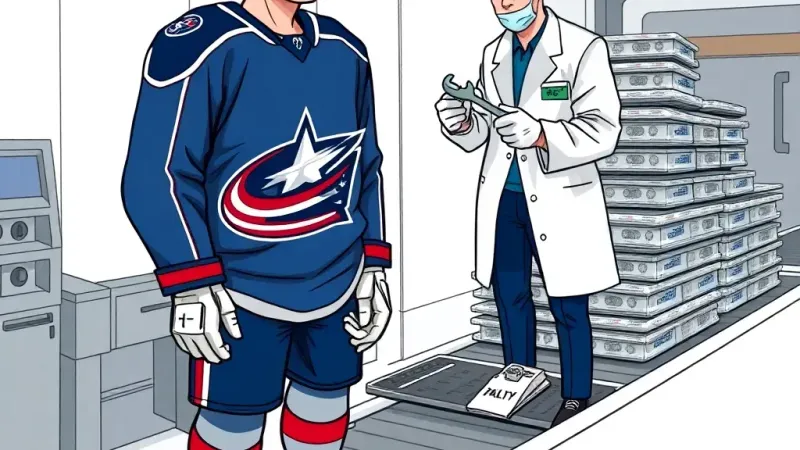
Columbus, OH — The Columbus Blue Jackets announced today they have initiated a "critical joint service protocol" for defenseman Damon Severson, effectively issuing a recall on his right shoulder. The procedure, described by the organization as "season-ending preventative maintenance," will see Severson sidelined for the remainder of the current operational cycle, prompting immediate reassessment of the team's defensive asset allocation strategies. This unscheduled downtime represents a significant disruption to the team’s projected return on investment for the current fiscal period.
"While we are, of course, disappointed by this unforeseen system malfunction, our priority is always to ensure the long-term operational integrity of our high-value personnel," stated Wallace 'Wally' Finnegan, Blue Jackets General Manager of Player Performance Optimization. "This isn't just about a player; it's about safeguarding a multi-million-dollar investment. You wouldn't ignore a check engine light on a top-tier luxury vehicle, would you? We're taking a similar proactive approach to avoid more costly future failures. The initial diagnostic report indicates a Grade 3 acromioclavicular separation, which, left untreated, could lead to catastrophic structural compromise and severely impact resale value." Finnegan added that the team's internal diagnostics had flagged the shoulder as operating at a suboptimal 67% efficiency, well below the preferred 95% threshold for elite-level impact absorption.
Sources within the organization indicate Severson's service appointment, which includes an extensive ligament reconstruction and cartilage resurfacing, is expected to restore the joint to "factory specifications, potentially exceeding them with proprietary enhancements." This follows a comprehensive internal audit of all active player components, a process Finnegan described as standard "asset health monitoring." The team confirmed Severson will be undergoing an intensive rehabilitation program, involving daily performance calibration and strength regeneration modules, with an anticipated return-to-service date in early Q3 of the next fiscal year. Initial estimates suggest the surgical intervention and subsequent rehab will cost the organization approximately $1.8 million, a figure Finnegan insists is a prudent investment against future total asset write-offs.
"It’s always tough to lose an integral piece of the operational matrix," commented Dr. Lenore Vance, Lead Sports Asset Longevity Specialist for the NHL Players' Collective. "The human body, especially one subjected to the extreme G-forces and repetitive impacts of professional hockey, is incredibly complex. Sometimes, despite best efforts, you encounter manufacturing defects or accelerated wear and tear. Our job is to ensure these high-performance models remain competitive for as many seasons as their warranty allows, maximizing their revenue-generating potential before planned obsolescence. Frankly, given the inherent fragility of the human shoulder under sustained professional athletic stress, a 10-year service life before major overhaul is considered exceptional."
When reached for comment, Severson himself expressed a stoic resolve. "Look, it's part of the job," he reportedly stated through a team spokesperson. "You sign the contract, you agree to the terms of service. My body is just a tool, and sometimes tools need sharpening, or in this case, a complete rebuild. I’m just focused on getting back to optimal functionality so I can contribute to shareholder value again." The player's agent, Brenda 'The Closer' Jenkins, reportedly confirmed that Severson’s performance-based bonus structures included clauses for "unforeseen maintenance expenditures" and "asset downtime."
The Blue Jackets are reportedly exploring options for a temporary replacement part, or potentially acquiring a refurbished model from the upcoming draft pool, contingent on a thorough pre-acquisition functional assessment.