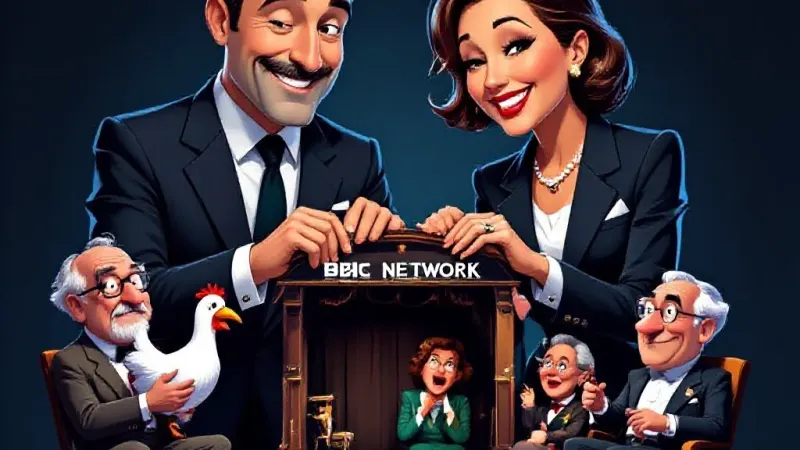
LONDON – The British Broadcasting Corporation has officially defended its long-standing practice of gradually sidelining veteran comedy performers, rebranding it as a proactive "Audience Resource Reallocation Initiative." The move comes amid persistent public complaints that established entertainers, whom the public inexplicably continues to adore, are being "tragically undervalued" and left to languish in the vast, forgotten archives of BBC Four.
"To truly connect with the evolving media consumer, we must strategically de-prioritize assets that, while once culturally significant, no longer align with current engagement metrics," explained Dr. Evelyn Finch, Head of Audience Demographics and Generational Content Flow at BBC Studios. "This isn't 'undervaluing'; it's 'resource optimization.' Every minute of airtime or pixel of digital real estate dedicated to a cherished elder statesman is a minute not spent nurturing a YouTube influencer whose primary talent is unboxing things with exaggerated facial expressions."
Internal memos, obtained by Hambry after being inadvertently uploaded to a public TikTok account by a junior content strategist, detail a multi-phase plan to "smoothly transition" older performers into what the BBC refers to as "legacy activation zones." These zones include sporadic appearances on obscure radio programs at 3 AM, being mentioned in retrospective documentaries by other, slightly less forgotten legends, or being utilized as voiceovers for documentaries about the mating habits of rare mollusks.
"The goal is not to eliminate our history, merely to curate it for maximum future-forward viability," stated Finch, while reviewing a focus group report indicating that 87% of surveyed 18-24 year olds believed "Bill Oddie" was either a brand of artisanal oat milk or a newly discovered cryptid. "This strategic re-alignment ensures that we can continue to invest in vital, groundbreaking programming, such as 'The Great British Bake Off: All Stars, Too,' or the development of an AI chatbot that can generate mildly amusing tweets for public figures."
The BBC insists that this approach allows for a broader, more inclusive content landscape, where every demographic feels represented, provided that demographic is under 30 and enjoys reality television featuring competitive knitting. The program’s success will be measured by a significant decrease in letters from people over 60 complaining about the lack of good comedy, which executives interpret as "positive audience adaptation to evolving content paradigms."
Critics suggest the only thing being tragically undervalued is the public's intelligence, but the BBC remains confident that, given enough time, the public will simply forget what good comedy even was.