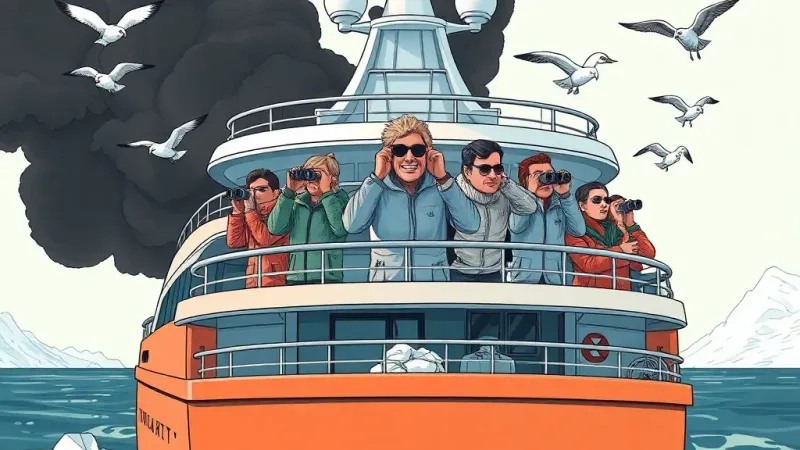
FAIRBANKS, AK — The prestigious Arctic Audubon Society’s "Delta Witness Tour," an exclusive birdwatching excursion designed to provide participants with a firsthand look at rapidly disappearing polar ecosystems, has sold out its entire 2025 roster in under three minutes. The luxury package, priced at $18,000 per person, includes round-trip private jet transportation to a remote Alaskan delta, gourmet locally sourced (where possible) meals, and guided sightings of species threatened by accelerated climate change.
Participants, largely comprised of high-net-worth individuals and corporate sustainability officers, will spend six days navigating the shrinking ice floes and permafrost bogs. The trip’s itinerary emphasizes "intimate encounters" with iconic Arctic avian life such as the critically endangered Spoon-billed Sandpiper and the fast-receding Ivory Gull, both considered crucial bio-indicators of a fragile environment. Each booking includes a "Climate Empathy Offset" fee, which, according to Audubon’s meticulously crafted press release, contributes to a nebulous global fund aimed at "raising awareness about the climate crisis" and planting exactly three saplings per passenger in a non-Arctic biome.
"We’re not just offering a tour; we’re offering an unparalleled opportunity to bear witness to history," stated Dr. Alistair Finch, Director of Experiential Conservation for the Arctic Audubon Society, from his well-appointed, climate-controlled office in Miami. "Our esteemed guests aren’t merely observing; they’re participating in a crucial, high-emissions act of global solidarity. They’re effectively paying a premium to say, 'I saw it with my own eyes before it was irrevocably gone,' a sentiment we believe is priceless." When pressed by an independent journalist about the significant carbon footprint of flying 20 individuals on a Gulfstream G650 private jet to the Arctic for a week, Dr. Finch clarified, "The emotional impact of seeing a polar bear from a safe, heated distance, perhaps even interacting with a sustainably sourced native craft, far outweighs the negligible environmental cost. It's about collecting vital data... and offering premium artisanal glamping experiences."
Local wildlife biologist, Dr. Ingrid Svaard, who declined an invitation to guide the tour, expressed skepticism. "They're literally flying over a problem they contribute to, to observe its symptoms," Svaard told reporters via satellite phone from a research outpost just miles from the proposed tour route. "It’s less a 'field trip' and more a 'final tableau' for people who enjoy expensive hobbies. We don’t need more people to *look* at the melting; we need fewer people *causing* the melting." She noted that the tour’s designated observation zones coincidentally overlap with several active oil exploration leases.
The society anticipates record demand for its 2026 "Oceanfront Property Tour" of rapidly eroding coastal communities.