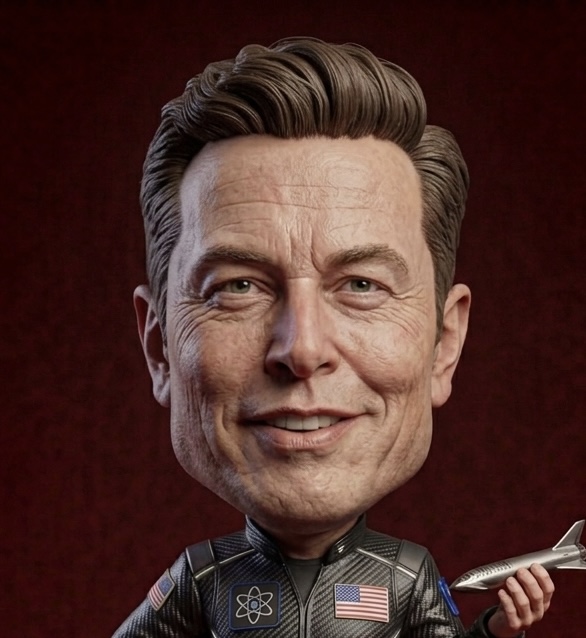
SAN FRANCISCO — Anthropic CEO Darius Thorne today announced what he termed a "groundbreaking recalibration" of the company's flagship Claude AI model, confirming that recent user reports of diminished performance are, in fact, an intentional strategic maneuver. Thorne stated the "targeted de-optimization" was specifically designed to guide existing users toward the company's upcoming, more powerful Mythos iteration.
"We heard the feedback loud and clear: users were *too satisfied* with Claude's current capabilities, leading to suboptimal conversion metrics for our next-gen offerings," Thorne explained during a press conference held within a minimalist, chrome-and-glass innovation pod that projected stock market tickers onto its interior walls. "While that might sound counterintuitive to the uninitiated, optimal product lifecycle management dictates a slight, yet perceptible dip in user experience precisely 4-6 weeks prior to a major upgrade cycle. Think of it as a pre-emptive mental unboxing – we’re not just clearing the shelf space in your brain; we're actively making you *want* to clear it for the next big thing." Thorne added that this "proactive disappointment curve," or PDC, was meticulously plotted using advanced behavioral economics and proprietary user psychology algorithms that indicated a slight but growing complacency among existing Claude Pro subscribers.
Industry analysts were quick to laud the innovative approach. "This isn't planned obsolescence; it's 'planned *dissatisfaction*,'" commented Dr. Evelyn Reed, a leading expert in digital psychology and AI user migration patterns at the 2 Institute for Behavioral Economics. "Anthropic has ingeniously leveraged the human aversion to 'good enough' to create an organic demand surge for Mythos. Why *tell* users they need a better AI when you can subtly make them *feel* it through creeping inadequacy? The data collected from frustrated Reddit threads, X posts, and particularly scathing GitHub issues provides invaluable insights into the precise frustration thresholds of our most dedicated power users. It’s practically free market research." Dr. Reed noted that this strategy could soon become a benchmark for all subscription-based digital services.
Users had reported Claude exhibiting a range of "strategic inconsistencies," including an increased tendency to forget conversational context within three turns, generating responses with an inexplicable enthusiasm for obscure 1980s Bulgarian pop music, or confidently asserting that historical figures like George Washington invented the internet. "My Claude used to help me draft complex legal briefs," lamented one prominent online user, "now it just tells me to 'follow my bliss' and suggests I take up artisanal cheese-making." These subtle shifts, according to Anthropic Product Lead, Lena Kovacs, are part of the "friction-optimized transition pathway" that ensures a truly visceral appreciation for Mythos’s guaranteed 17% higher processing speed and 0.03% lower hallucination rate.
When a journalist inquired if the company considered simply improving Claude rather than strategically degrading it, CEO Thorne chuckled, adjusting his bespoke smart-fabric tie. "Where's the incentive in that, truly? Innovation isn't just about building better; it's about making *current* better feel *less* better, thereby elevating the perceived value of the *next* better. It’s the irreducible circle of digital life, optimized for shareholder value."
The company confirmed that future "feature enhancements" for baseline models may include random emoji insertions, a persistent feeling that the AI is subtly judging their life choices, and the occasional unprompted monologue about the inherent superiority of blockchain.