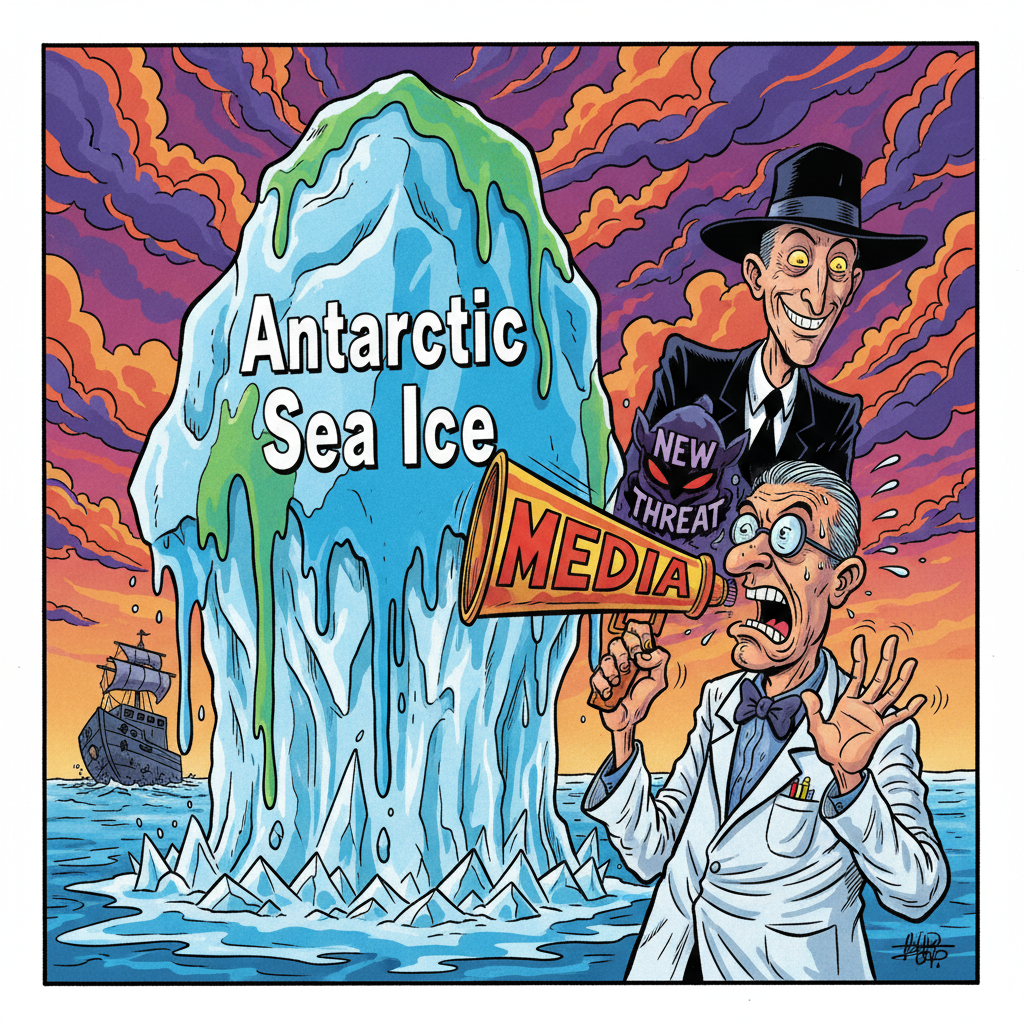
PALMER STATION, ANTARCTICA – US scientists have confirmed that Antarctic sea ice coverage has rebounded significantly in 2026, nearing its annual summer average after four years of extreme lows. The unexpected recovery has triggered an immediate, frantic search for a new environmental crisis to report, sources close to the research community indicate.
“While we’re thrilled the ice is back, it frankly throws a wrench in our long-term messaging strategy,” admitted Dr. Evelyn Thorne, lead climatologist for the National Ice Data Center. “We had a really good run with 'unprecedented collapse' and 'irreversible decline.' Now we have to pivot. Is it a 'deceptive surge'? A 'last gasp'? We’re workshopping some truly terrifying phrases.”
Initial findings suggest the rebound is likely due to a complex interplay of oceanic currents, atmospheric pressure systems, and the sheer, unadulterated spite of a planet determined to make climate models look foolish. Researchers are currently investigating whether the ice is 'too thick' or 'structurally unsound' as potential new angles for concern.
“The public expects a certain level of existential dread from us now,” stated Dr. Thorne, adjusting her parka. “We can’t just say, ‘Oh, it’s fine for now.’ That’s not grant-winning science. We need to find the hidden catastrophe within this temporary reprieve. Perhaps the ice is now attracting invasive species of polar bears from the Arctic? We’re open to ideas.”
Funding for the 'Find A New Problem' initiative is expected to be approved by next quarter, ensuring peak anxiety levels are maintained.