
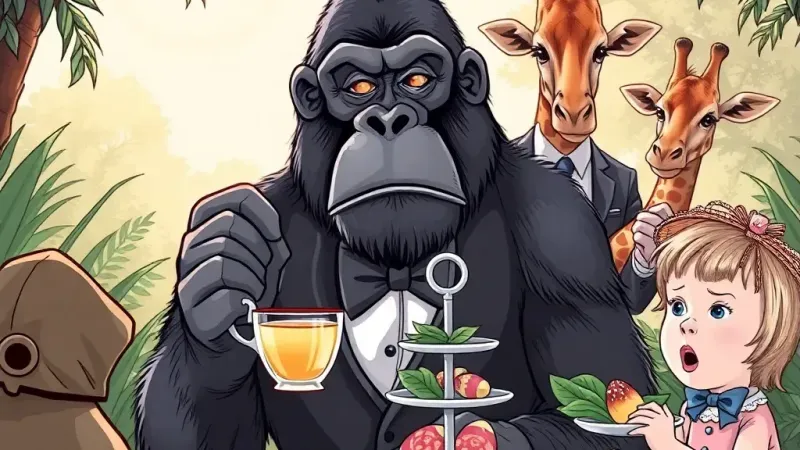
SANTIAGO – The Santiago Metropolitan Zoological Institute has officially pivoted its annual Easter celebration strategy, announcing that future egg hunts will exclusively feature animal participants. Citing a comprehensive post-event analysis, zoo officials concluded that non-human inhabitants consistently deliver a superior, more predictable, and significantly less litigious holiday experience compared to their bipedal counterparts.
“Our data indicates a measurable uptick in overall engagement metrics when focusing on our animal population,” stated Dr. Aris Thorne, Director of Experiential Zooscape Management at the Institute. “We observed a 47% reduction in parental complaint emails, a 68% decrease in Level 3 biohazard candy wrapper incidents, and zero instances of demands for refunds on inherently free chocolate. This allows for optimal resource allocation and a more streamlined event workflow.” Dr. Thorne further elaborated that animals, unlike children, require no complex waiver system and do not attempt to resell found eggs on emerging digital marketplaces.
Historically, human-centric holiday events presented significant logistical friction points, including sugar-induced skirmishes, lost-and-found disputes over generic plastic eggs, and unexpectedly persistent demands for character meet-and-greets with underpaid staff in decaying mascot costumes. In stark contrast, the animals, ranging from capybaras to macaws, exhibited enthusiastic and highly compliant pre-foraging behaviors, demonstrating a remarkable efficiency in egg detection and consumption, often without leaving behind the sticky residue associated with human children.
“The animals don’t judge the artisanal quality of the chocolate, nor do they question the ecological footprint of the plastic eggs,” noted Lucía Ramírez, the Institute’s Lead Behavioral Enrichment Specialist. “Their primary objective is consumption, which aligns perfectly with our enrichment goals and offers unparalleled visual content for our 2 channels. It’s a win-win for brand alignment and behavioral 2.” The Institute is now exploring similar animal-exclusive adaptations for other traditional human holidays, including a potential 'Canine Christmas' for their wolf enclosures and a 'Feline Fourth of July' featuring catnip-infused firecrackers.
The Institute maintains that this strategic shift reflects a commitment to prioritizing operational efficiency and stakeholder satisfaction, effectively eliminating the unpredictable variables introduced by the human element. Moving forward, families seeking a traditional egg hunt experience are encouraged to explore local park district offerings, which, according to Dr. Thorne, are “better equipped to handle the unique challenges of unregulated human joy.”