
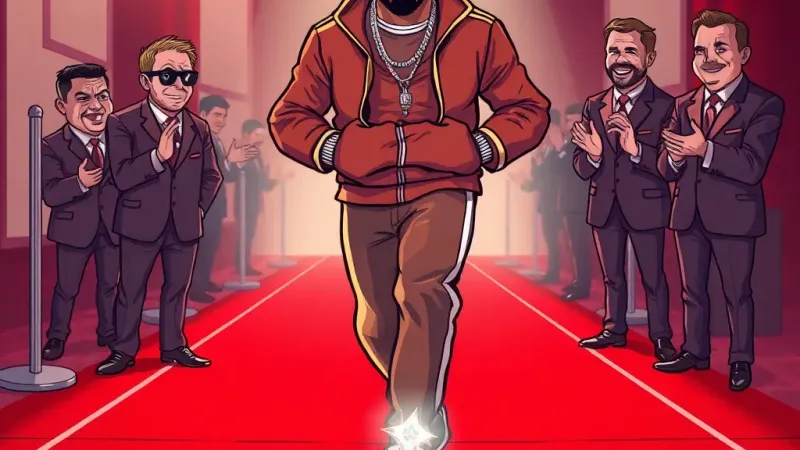
LOS ANGELES — Hip-hop analysts and brand strategists are celebrating the recent felony arrest and subsequent viral mugshot of rapper Pooh Shiesty as a "bold and strategically brilliant move" in his ongoing career narrative, particularly in the wake of a recent diss track from fellow artist Gucci Mane. Experts suggest the timing and severity of the charges—including alleged kidnapping and robbery—have inadvertently cemented Shiesty’s "street credibility" and significantly boosted his engagement metrics across all major platforms.
"In an era where authenticity is the most valuable currency, Mr. Shiesty has, perhaps unintentionally, executed a flawless content drop," stated Dr. Evelyn Reed, Professor of Digital Brand Management at the University of Phoenix Online. "The new mugshot, arriving just days after the public knew there was escalating tension, isn't just a photograph; it's a declarative statement. It’s a confirmation of narrative, a living, breathing testament to a particular brand ethos that resonates deeply with his core demographic." Reed highlighted an immediate 3,000% spike in hashtag engagement related to Shiesty and the charges within hours of the mugshot's release.
Social media platforms, often the battleground for hip-hop feuds, have become the primary arena for this "strategic pivot." Fans and commentators alike are dissecting every angle of the legal developments, not as serious allegations, but as compelling plot points. "We're seeing unprecedented levels of 'sticky' content," explained Chad Kensington, Senior Viral Content Analyst at "CultureMetrics Now." "The mugshot wasn't just shared; it was remixed, memed, and analyzed for subtle expressions of defiance. This isn't damage control; it's narrative acceleration. Every tweet, every reaction video, every speculative thread about his alleged involvement becomes free, highly-targeted marketing."
While legal experts outside the industry's PR bubble caution against downplaying the gravity of felony charges, those specializing in celebrity crisis management are already preparing case studies. "Ordinarily, you'd advise a client to lay low, issue a boilerplate statement, and hope for the best," noted Attorney Brenda "Bree" Davis, founder of "Docket-to-Dollars Legal PR." "But in certain niche markets, 'low profile' is antithetical to the brand. Here, the charges, however serious, have been skillfully reframed by the collective cultural consciousness into a potent amplifier of the artist's established persona. It’s almost as if the legal system is, in this specific instance, providing unparalleled, high-stakes publicity." Davis added that several up-and-coming artists have already inquired about "replicating the Shiesty model" for their own career trajectories.
The incident is expected to set a new benchmark for how artists can leverage real-world consequences into compelling, highly viral, and undeniably authentic brand experiences. Critics argue it blurs the lines between art, crime, and marketing, but industry figures are simply asking: "Did the engagement numbers go up?"
For now, the answer is a resounding "yes," solidifying the "prison-industrial-complex-as-promotional-tool" model as the gold standard for late-stage celebrity branding.