
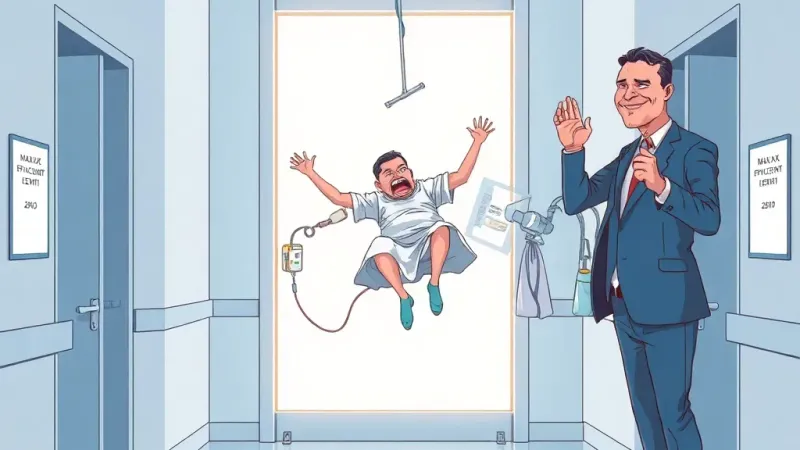
DALLAS, TX — Smarter Technologies today unveiled OptiCare-AI, a groundbreaking 2 platform poised to transform hospital operations by streamlining patient approvals. The company asserts OptiCare-AI leverages advanced predictive analytics to expedite patient processing, ensure optimal bed utilization, and significantly reduce the time patients spend within hospital walls, often by reclassifying conditions that previously warranted extended stays.
The system, developed over 36 months by a multidisciplinary team of data scientists and former insurance claims adjusters, boasts a proprietary algorithm trained on over 2.3 billion anonymized patient billing codes and 750 million denied claims from the last decade. Its primary function is to identify and flag any medical procedure or inpatient day that does not directly contribute to the *immediate* non-fatal stabilization of the patient, thereby allowing for faster discharge or outright denial of extended care. Smarter Technologies highlights early pilot program results indicating an average 28% reduction in inpatient bed days and a 15% increase in same-day discharges for previously admitted cases.
"OptiCare-AI isn't just about saying 'yes' or 'no' faster; it's about asking the *right* questions regarding resource allocation," explained Dr. Elara Vance, lead AI ethicist for Smarter Technologies, during a virtual press conference. "For example, if a patient presents with 'persistent lower back pain,' the system, using neural network analysis, might suggest a more efficient '2 modification assessment' and outpatient referral instead of a costly MRI and physical therapy authorization. It’s about optimizing for societal resource velocity, not just individual comfort metrics."
Critics of the previous 'human-centric' approval processes often cited their inefficiency and susceptibility to emotional appeals, leading to what OptiCare-AI’s white paper terms 'sub-optimal resource allocation patterns.' The new platform offers a data-driven, dispassionate approach, ensuring that every approval aligns strictly with the most economical pathway to patient egress from the facility. Patient advocacy groups, however, have expressed concerns that the system might inadvertently prioritize financial metrics over complex individual health needs, a notion Smarter Technologies dismisses as 'legacy thinking' in an era of digital health transformation.
Initial rollout will target hospitals struggling with bed capacity and 'unnecessarily high' patient-stay averages, with Smarter Technologies promising a full return on investment within 18 months through reduced operational overhead and a higher volume of patients cycled through the system. While unconfirmed reports suggest a minor uptick in patient re-admissions within 72 hours post-discharge, Smarter Technologies representatives attribute this to improved 'patient independence' and a more 'proactive engagement with external care ecosystems.'