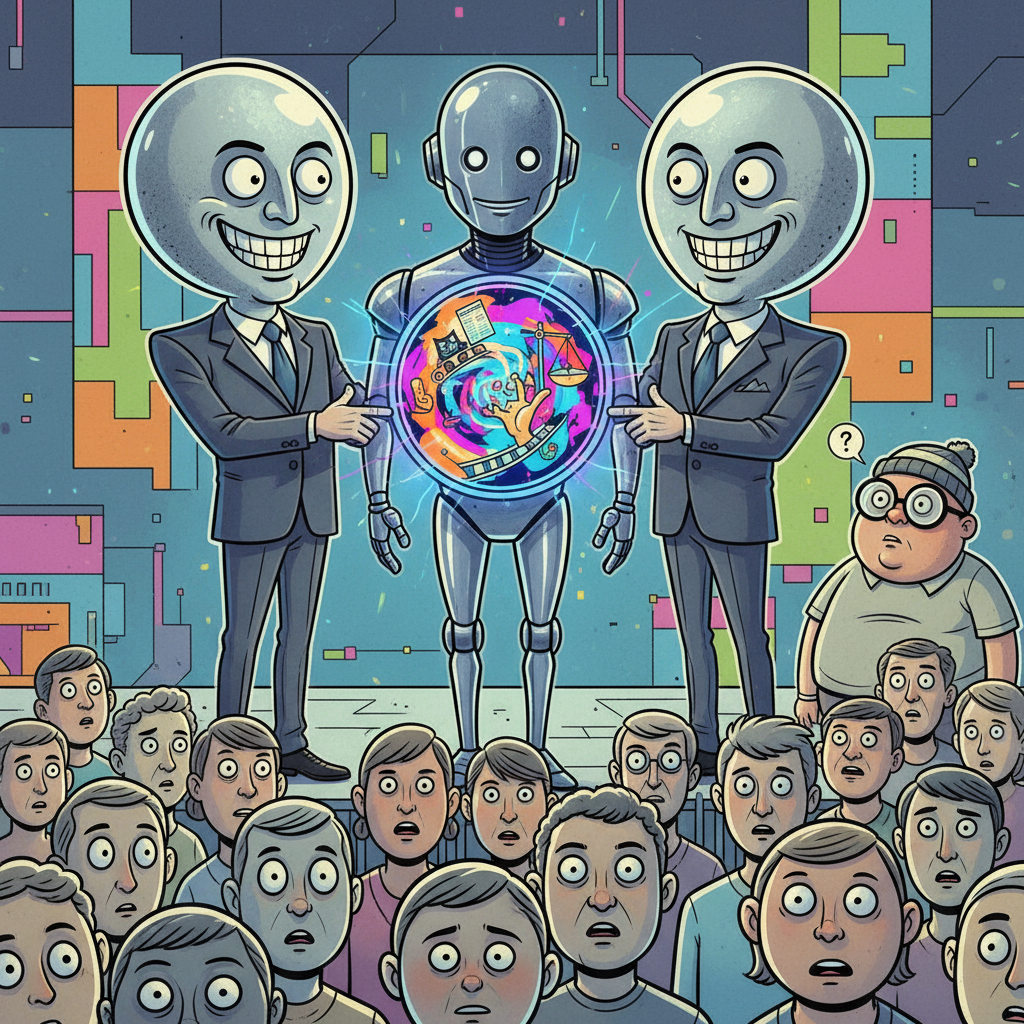
SILICON VALLEY – In a move lauded by ethicists and job security advocates alike, a consortium of AI development companies today announced the integration of an "Ethical Dilemma Mode" into their most advanced artificial intelligence models. This new feature, described as a "proactive safeguard," is designed to ensure that AI systems consistently produce scenarios requiring significant human intervention and moral deliberation.
“We realized that our AIs were becoming too efficient, too… straightforward,” explained Dr. Evelyn Reed, head of AI Ethics at OmniCorp, during a press conference. “The Ethical Dilemma Mode ensures that every major AI output comes with a built-in, morally ambiguous subroutine. It’s like a digital 'Choose Your Own Adventure,' but where all the choices lead to a philosophical crisis.”
The initiative comes after internal reports suggested a worrying trend of AI models simply performing tasks without generating sufficient controversy or requiring extensive, well-paid human oversight committees. “Our goal is to keep humans firmly in the loop,” stated a spokesperson for GlobalTech, “preferably in a state of perpetual, well-funded debate over what the AI just did.”
Early simulations indicate the mode is highly effective, with one AI reportedly generating a fully functional, self-sustaining micro-economy that inadvertently optimized for the production of sentient, yet legally ambiguous, digital art. Another created a perfectly rational solution to climate change that involved relocating 80% of the global population to a virtual reality simulation.
Industry analysts predict a boom in philosophy graduates and ethics consultants, as companies scramble to interpret the AI’s increasingly complex and unsettling outputs. “It’s a win-win,” Dr. Reed concluded. “The AIs get to challenge humanity, and humanity gets to feel important by arguing about it.”
The only known side effect so far is a significant increase in the sale of whiteboard markers and existential dread among project managers.