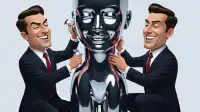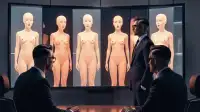
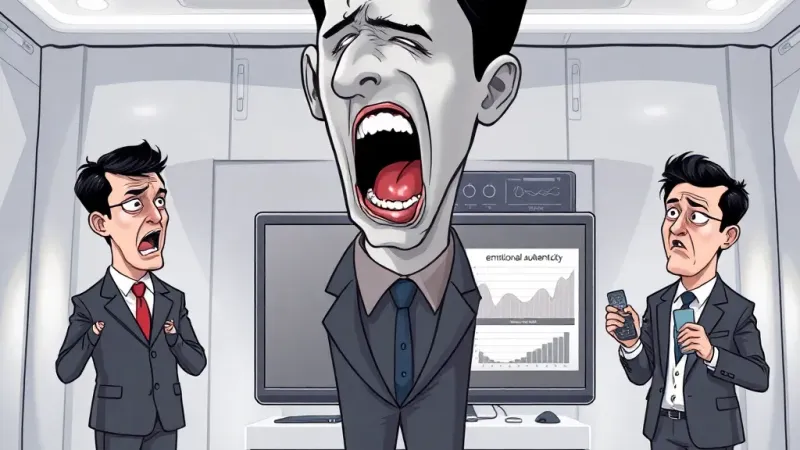
Hollywood studios and talent agencies are reportedly re-evaluating long-held assumptions about human physiology after actor Adam Scott experienced an "audible yelp" during a recent viewing of a scene from his new series, *Hokum*. The involuntary vocalization, unprecedented in its public documentation, has raised profound questions about the true nature of performance and the inherent capabilities of the human emotional system.
The incident, initially dismissed as a mere "human reflex," has since been meticulously analyzed by a consortium of media psychologists and behavioral economists. Dr. Eleanor Vance, head of the newly formed Institute for Involuntary Performer Responses at USC, stated, "For too long, we've operated under the assumption that actors, particularly those of Mr. Scott's caliber, primarily communicate through pre-scripted dialogue and carefully modulated facial expressions. This 'yelp,' however, suggests a previously uncatalogued layer of raw, unfiltered being. It's like discovering a new primary color." Dr. Vance noted her team is currently dissecting the precise acoustic properties of the yelp, expecting a full report by Q3.
The revelation has sent ripples through talent representation. "We always tell our clients to 'bring it,' but we never anticipated 'it' could include something so… organic," confessed Brenda Sterling, a veteran agent at Creative Artists Group. "Now we're drafting new clauses for contracts, requiring actors to disclose any history of 'spontaneous non-verbal vocalizations.' The last thing we need is a talent releasing an unsanctioned guffaw during a dramatic monologue." Industry pundits predict a shift towards "authenticity coaching," where performers are encouraged to occasionally emit guttural sounds to appear more "relatable" to audiences increasingly desensitized to polished performances.
The scene in *Hokum* that triggered Scott's reaction reportedly depicted a character attempting to navigate a particularly convoluted customer service menu while simultaneously being told their streaming subscription had unilaterally upgraded to a premium tier. Initial reports suggested Scott's yelp was a response to the "chilling" psychological horror of the scene. However, an anonymous junior executive at StreamWorld, Inc., whose service was parodied, suggested the yelp was merely "a baseline response to the shared human trauma of digital bureaucracy, completely unrelated to Mr. Scott's acting process." The executive, who requested anonymity due to the ongoing "yelp-gate" investigations, added, "Honestly, we get about seven million of those a day through our feedback forms. We call them 'the screams of the damned.'"
Sources close to Mr. Scott report he has since resumed normal activities, though a team of behavioral observers is reportedly monitoring his "baseline human reactions" for any further anomalies, including but not limited to sighs, grunts, or the occasional sniffle.