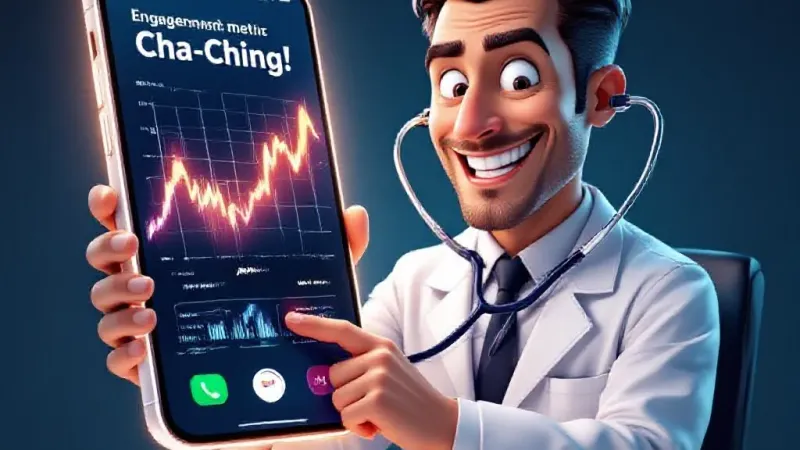
A groundbreaking new study from the Institute for Aspirational Proximity Studies (IAPS) confirms what tech giants have long suspected: your smartphone’s algorithms possess a deeper, more intimate understanding of your health needs than any board-certified physician. Researchers found that consistent daily data harvesting, coupled with targeted content delivery, creates a health profile so precise it renders traditional medical consultations "quaintly inefficient." The report, ominously titled "The Algorithmic Oracle: Why Your Scroll Finger Is Your New Pulse," suggests that human doctors are simply too slow and too bound by inconvenient ethical frameworks to truly serve the modern patient.
"For too long, healthcare has been limited by human empathy and ethical guidelines," stated ByteDance Senior VP of Monetized Wellness, Skip Hashtag, in a press conference delivered via hologram. "Our algorithms don't judge your late-night doomscrolling or your 3 AM 'is this rash normal?' searches. They simply learn, categorize, and present the most engaging solutions, whether it's a doctor who looks like your favorite influencer, a DIY essential oil cure that ships within 24 hours, or a sponsored ad for a new 'gut health' supplement that promises to make you a better person. It's about empowering the user, one monetized click at a time, ensuring optimal data retention and advertising revenue."
This paradigm shift has been met with, predictably, mixed reactions from the increasingly irrelevant medical establishment. Dr. Elena Ramirez, a family physician for twenty years, admitted feeling "a bit redundant" after being replaced by an AI chatbot named 'Dr. SwipeRight.' "My patients used to ask me for advice. Now, they show me TikToks of a perfectly sculpted 'health guru' chugging green juice and ask if I can prescribe whatever 'Doctor' Flex_Fit_Guru is pushing. When I try to explain basic anatomy or the concept of peer-reviewed research, their eyes glaze over. But mention a new detox tea with a catchy jingle, promising to cure everything from hangnails to existential dread? Suddenly, they're all ears, and already ordering from the link in bio. It's impossible to compete with an algorithm that understands their attention span and impulse buying habits better than I understand their symptoms."
The IAPS report highlighted significant economic benefits to this new model, projecting billions in savings for health insurance providers who can now simply direct patients to the most algorithmically-aligned (and cheapest) self-diagnosis content. "Why pay for an MRI when your phone already knows you're just looking for validation that your 'brain fog' is a unique spiritual awakening or a simple case of needing another energy drink?" the report quipped, noting the alarming cost-efficiency of convincing people they're fine rather than treating them. Future plans include mandatory "algorithmic wellness check-ins" where users will be required to scroll through 10-15 sponsored health posts before their insurance claim is even considered.
Ultimately, the study concludes, the most effective healthcare isn't about getting better; it's about staying engaged enough to see the next ad, and perhaps, occasionally, buying something.