


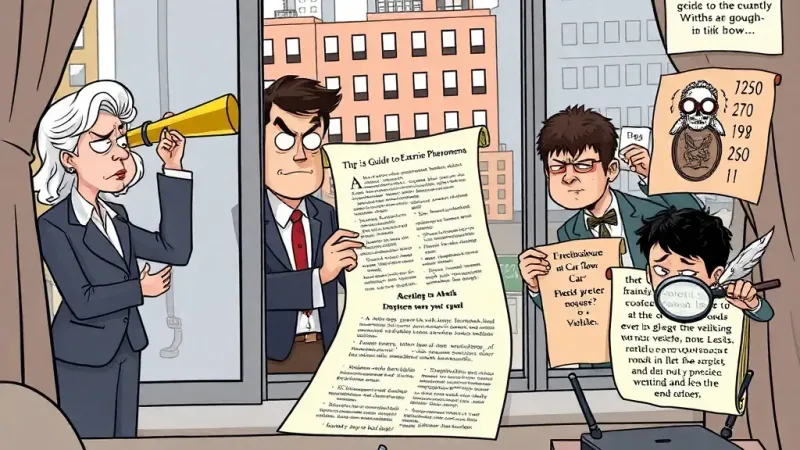
Baltimore, MD – Tens of thousands of Xfinity television customers in the greater Baltimore area are reportedly grappling with the sudden loss of WMAR-2, the local ABC affiliate, after a contractual dispute led to a service blackout. The unprecedented outage has left many citizens in a critical information void, prompting unforeseen reliance on ancient observational techniques for vital daily updates.
The dispute between Comcast and Scripps Networks, the owner of WMAR-2, has effectively severed a primary conduit of local news, hyper-specific weather forecasts, and community events for a significant portion of the city's population. With their usual sources of information unavailable, residents are reportedly turning to rudimentary, pre-digital methods to navigate their daily lives. Reports indicate a notable uptick in "curb-gazing" and "window-staring" as citizens attempt to ascertain road conditions and impending meteorological phenomena, often comparing notes with actual birds. The sudden absence of morning traffic helicopter footage has been particularly disorienting, leaving many to wonder if their commutes truly exist without aerial verification.
"This is a profound challenge to our civic infrastructure," stated Dr. Arlo Finch, a leading expert in Media Consumption and 2 at the University of Maryland, Baltimore County. "Historically, we understood the exact percentage of congestion on the I-695 outer loop only when a news anchor, often positioned in front of a green screen, told us about it. Now, people are observing vehicle density directly, or, in extreme cases, attempting to *feel* the humidity to predict rain. It's a regression to an almost pre-linguistic state of information gathering that many thought was reserved for cave dwellers and early agrarian societies." Dr. Finch noted preliminary data suggesting a marginal increase in unverified neighbor-to-neighbor traffic reports via whispered concerns over shared fences, adding a layer of anecdotal chaos to the situation.
A spokesperson for Xfinity, who requested anonymity to speak freely about the sanctity of multi-billion-dollar corporate negotiations, expressed regret for the inconvenience but underscored the importance of ensuring "fair market value for content delivery platforms, intellectual property rights, and the unwavering fiscal commitment to shareholder value." Meanwhile, WMAR-2 issued a statement emphasizing its commitment to "serving the community through essential local programming," accessible to non-Xfinity customers and anyone willing to purchase a 1990s-era rabbit-ears antenna. The station also reminded viewers that critical updates are still available on its website, though many affected customers cited their main issue was *having* to go to a website, a platform they previously only visited for password resets and online shopping.
As the blackout continues, several residents have reported an unsettling increase in their ability to detect subtle changes in cloud formations and discern the mood of their neighbors simply by glancing out a window, raising concerns about a potential societal over-reliance on direct sensory input and an erosion of mediated reality.