

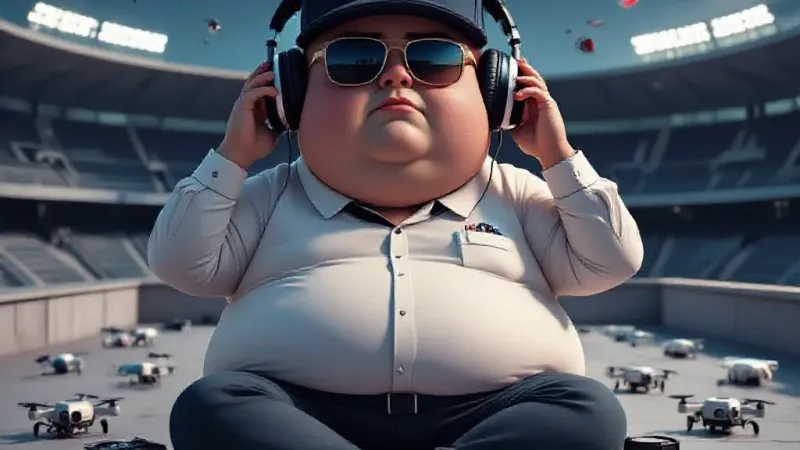
WASHINGTON D.C. — As the world gears up for the impending World Cup, organizers today confirmed their anti-drone defense strategy is, as one senior official put it, "mostly about vibing and seeing what happens." The refreshingly candid posture comes amidst widespread concerns about aerial threats, which Senator Mike Mullin recently described as an area "everyone's a little behind" on. Rather than scrambling to catch up, officials have opted to lean into this "dynamic flexibility," rebranding security lapses as "strategic adaptability."
"We're not just looking at traditional security perimeters; we're cultivating an atmosphere of 'collective awareness' that transcends mere physical barriers," stated Dr. Kendra Thorne, Director of Experiential Threat Management at the newly formed Global Event Serenity Initiative. "Rigid, old-school defense grids can stifle the organic flow of the crowd and, frankly, the entrepreneurial spirit of unauthorized aerial content creators. Our approach embraces the inherently unpredictable, allowing for spontaneous atmospheric interactions that truly reflect the decentralized, always-on nature of modern sports fandom." Dr. Thorne elaborated that static defenses might deter "innovative fan expression," a critical component of today's immersive spectacle.
Sources close to the organizing committee, who spoke on condition of anonymity to discuss the evolving protocols, indicated that this "human-centric" strategy also includes a robust "Look Up, Look Out" campaign. This initiative encourages attendees to be "active participants in their own observational safety" by downloading a proprietary app that allows them to "co-create safety" by tagging any "unusual flying objects" with relevant emojis. Another official, speaking off the record, noted the significant cost savings associated with not investing heavily in unproven drone countermeasures. "Why pour billions into tech that might get jammed or hacked when you can empower billions of eyeballs? Plus, it aligns perfectly with the citizen journalism ethos," he mused, framing the resource reallocation as a commitment to "fiscal innovation."
Further enhancing the "unforeseen atmospheric events" protocol, organizers are reportedly exploring partnerships with leading influencer marketing firms. The goal is to rapidly monetize any rogue drone footage by commissioning on-site creators to produce "authentic, raw content" for official channels within seconds of an incident. "We see every unexpected aerial intrusion as a unique brand integration opportunity," explained a FIFA spokesperson, adding that fans could even win prizes for the most engaging content captured during a "disruption." The ultimate goal, they insisted, is to transform potential threats into "unforgettable, shareable moments."
The final layer of defense involves a contractual agreement with major broadcasters to simply cut to commercial during any "unforeseen atmospheric events" that can’t be immediately monetized.