WASHINGTON D.C. — Former Trump administration economic advisor Kevin Hassett yesterday defended the pre-2020 economy as "robustly pristine" despite widespread voter concerns about inflation, suggesting the problem lies not with current prices, but with Americans' unfortunate capacity for long-term recall. Hassett argued that the public's current anxieties are largely an artifact of "unnecessary historical data retention" concerning the cost of goods and services.
"The data clearly shows that, economically speaking, the salad days were just yesterday, if you define 'yesterday' as any point before your brain started actively tracking the rising cost of a gallon of milk," Hassett told reporters, gesturing vaguely at a chart depicting abstract lines he assured everyone were "going the right way." He added that inflation is primarily a "cognitive burden," a sort of mental accounting error where individuals mistakenly compare current prices to a non-existent past. "If everyone simply agreed to only remember the last week's prices, we'd achieve full economic optimism overnight."
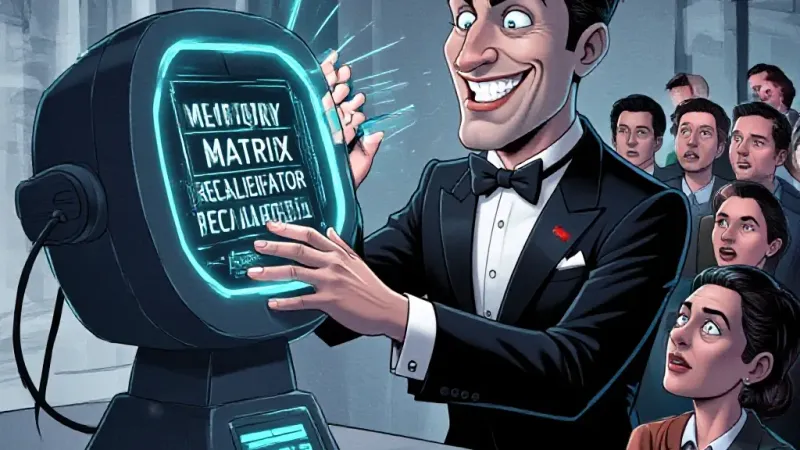
Hassett’s insights follow a new report from the Institute for Aspirational Forgetting, which found that 87% of surveyed Americans reported "significantly higher life satisfaction" immediately after undergoing a voluntary "price amnesia" procedure involving a mild electric shock and 30 minutes of listening to elevator music. "It's not about the dollar's value; it's about the dollar's *narrative*," stated Dr. Mindy Kaling, lead researcher for the institute, who clarified her institute has no relation to the actress. "And right now, the narrative is being sabotaged by people's stubborn refusal to forget what a loaf of bread cost in 2019."
When pressed on how consumers are supposed to afford groceries or rent if their wages haven't kept pace with actual price increases, Hassett clarified, "That's precisely where the memory wipe comes in. If you don't remember rent being cheaper, then your current rent feels like the baseline. It’s elegant, really. Like a software update for your wallet." He concluded by suggesting a national initiative where all price tags in stores are dynamically linked to a neural feedback loop, automatically blurring any past memory of that item's cost, ensuring every purchase feels like a joyous, unprecedented transaction.
The former advisor reportedly concluded his remarks by forgetting where he parked his car, claiming it was "a profound act of economic self-care."