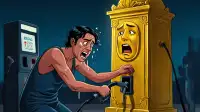

WASHINGTON D.C. — A groundbreaking new White House initiative designed to boost the economic prospects of gig economy workers celebrated its first major success this week, heroically eliminating taxes on tips, thereby allowing workers to keep 100% of the supplementary income that often constitutes the majority of their actual earnings. The announcement came during a meticulously orchestrated photo opportunity where "DoorDash Grandma" Sharon Simmons delivered two McDonald’s bags directly to the President, ostensibly showcasing the program’s immediate, life-changing benefits.
The move, championed by the White House, aims to put "hundreds of millions of dollars" back into the pockets of Dashers and other platform workers. "This administration understands that the backbone of our economy isn't some fancy big-city tech company, it's the hardworking individuals earning an honest living, sometimes exclusively through the generosity of others," stated White House Press Secretary Reginald Ponsonby. "By ensuring every penny of their gratuities remains untaxed, we’re empowering Americans to build wealth, one $3 tip at a time, entirely bypassing any need to address their base compensation or employment status."
Industry analysts were quick to laud the innovative approach. "It’s a masterstroke of economic policy," remarked Dr. Helena Vance, a Pro-Tip Economist at the Gig Worker Solidarity Foundation for Corporate Profits. "Why burden corporations with the responsibility of living wages when the consumer can shoulder the entire burden through voluntary payments, which we then heroically declare tax-exempt? This shifts accountability so elegantly that it almost makes you forget companies still pay next to nothing per delivery." Dr. Vance noted that studies have consistently shown that an untaxed $5 tip generates precisely 100% more post-tax income than a taxed $5 tip, a finding she described as "undeniable."
However, not all beneficiaries felt the impact quite as dramatically. "It’s nice, I guess, not having to pay taxes on the $40 in tips I made last week," said Carlos "Chuck" Ramirez, a six-year veteran DoorDasher from Akron, Ohio, as he meticulously checked his transmission fluid. "But if DoorDash actually paid me enough to cover gas and car repairs without relying on tips, I wouldn't be driving 70 hours a week to begin with. It feels a bit like congratulating a drowning man for getting a slightly cheaper bucket." Ramirez expressed cautious optimism that the policy might one day extend to the actual base pay from these platforms, though he conceded that seemed "far-fetched."
A spokesperson for DoorDash hailed the policy as a "monumental step towards worker empowerment," confirming the company's commitment to supporting policies that let "Dashers keep more of what they earn," provided "what they earn" is interpreted strictly as tips, and "more" is defined as the marginal tax difference on those tips. The company added that they are actively exploring additional policies that allow workers to further optimize their income, such as creating a competitive internal marketplace for used dash cams.
"We’re just so thrilled that now, after meticulously deducting gas, car maintenance, health insurance, and federal income tax, our Dashers can finally pocket an extra few dollars from their tips," a DoorDash spokesperson added, before suggesting workers also explore the company's new line of branded car fresheners.