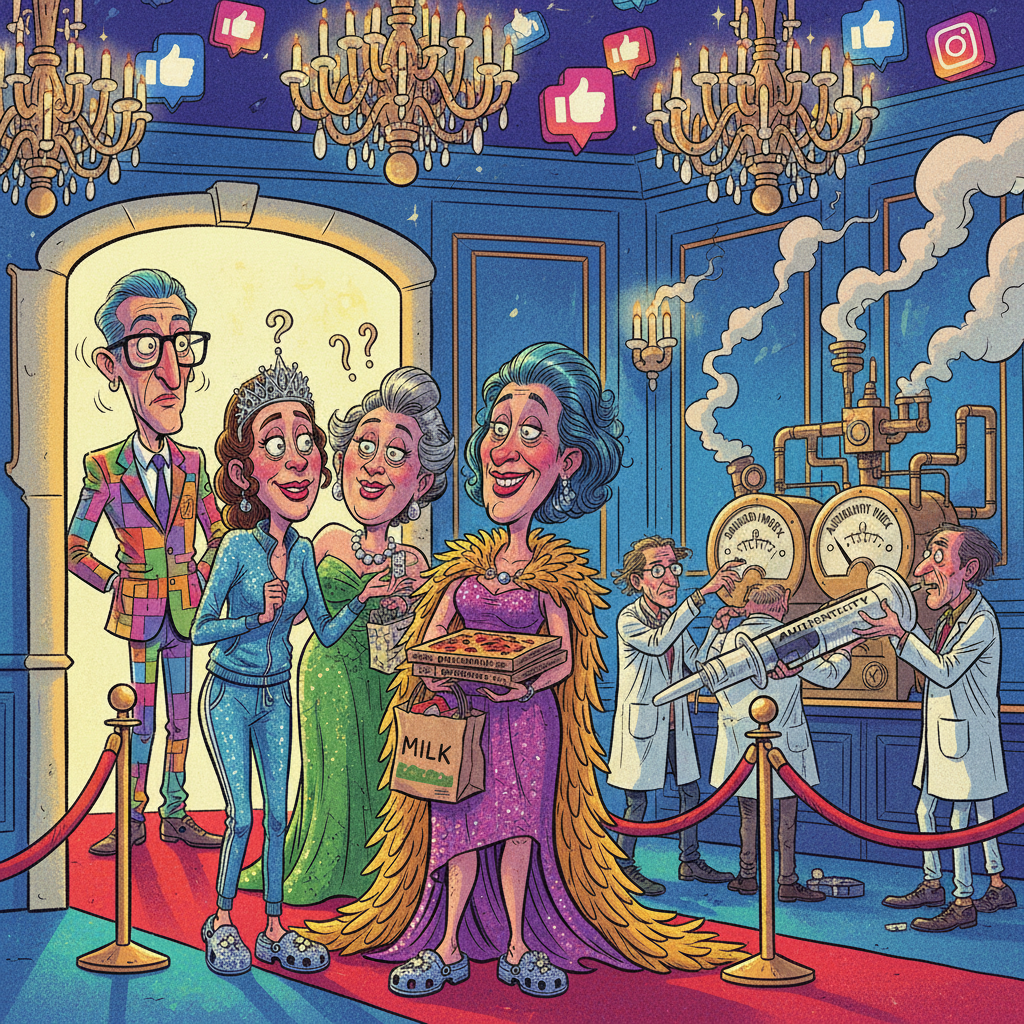
LOS ANGELES, CA – In a stunning display of strategic vulnerability, Hollywood's elite once again descended upon the Vanity Fair Oscars after-party, where their carefully curated 'bold' fashion choices were hailed as a critical public service. Cultural anthropologists are now suggesting these annual sartorial spectacles are less about style and more about providing the public with a much-needed, albeit highly artificial, sense of connection.
“The public needs to believe that even the most stratospherically wealthy among us still occasionally struggle with a zipper or choose an outfit that, while technically 'art,' makes sitting down a genuine challenge,” explained Dr. Evelyn Reed, head of the Institute for Manufactured Empathy. “It’s a crucial component of the social contract. If they always looked perfectly comfortable and effortlessly chic, the whole system would collapse.”
Attendees reportedly spent months with teams of stylists, publicists, and existential dread coaches to achieve the precise level of 'undone glamour' that signals both immense wealth and a fleeting, almost imperceptible nod to the common person’s morning routine. One anonymous publicist confessed, “We aim for ‘just woke up like this, but also I have a full-time seamstress and a personal trainer who specializes in posture for avant-garde corsetry.’ It’s a fine line.”
Critics, however, argue that the annual event is merely a high-budget charade designed to distract from the actual work of filmmaking. But Dr. Reed insists, “No, no, you misunderstand. The real work is making us believe they’re just like us, only with more expensive fabric and fewer visible pores.”
Sources close to the event confirmed that several celebrities were seen attempting to discreetly adjust their 'risky' ensembles, proving that even the most meticulously planned acts of rebellion against conventional clothing still involve a surprising amount of chafing.