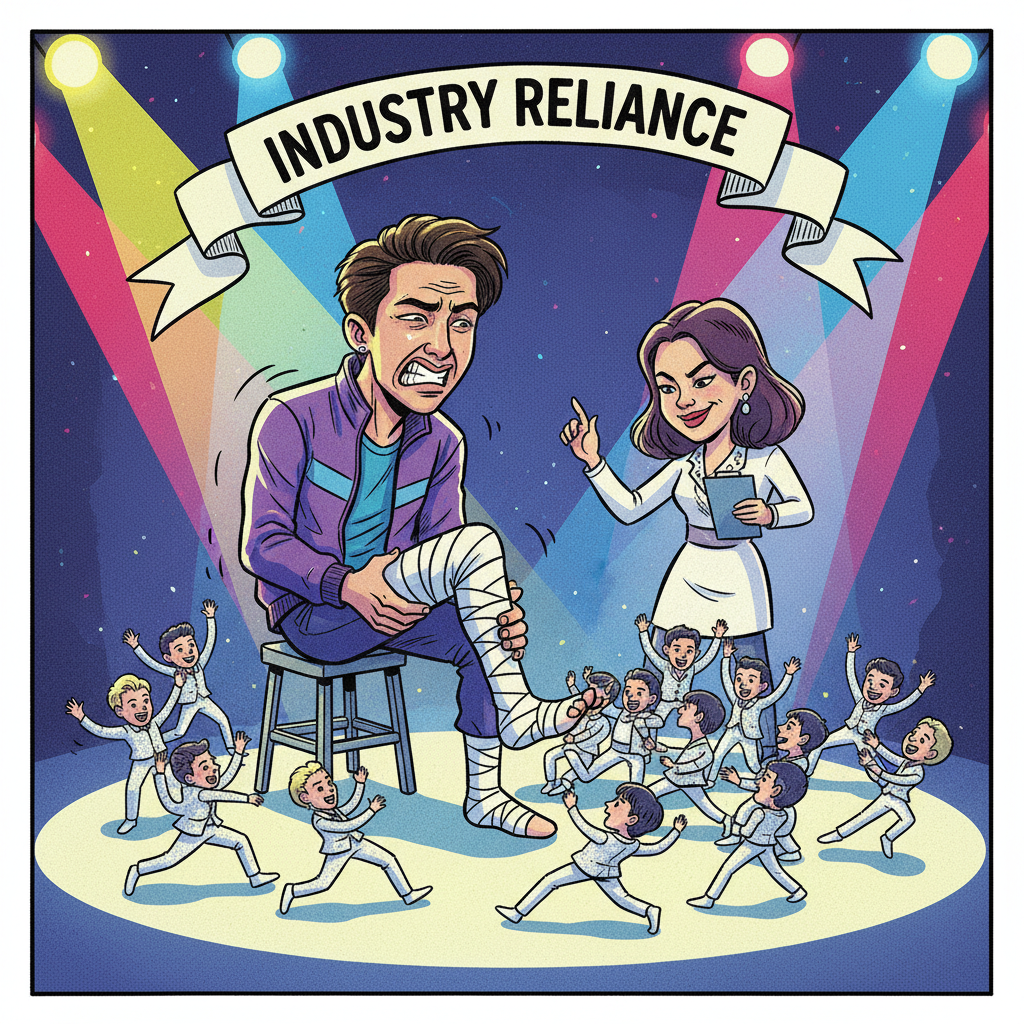
SEOUL – A recent ankle sprain sustained by RM, the revered leader of global sensation BTS, has sent shockwaves through the K-Pop industry, not for its severity, but for what it has inadvertently revealed about the intricate mechanics of synchronized dance. Industry analysts are now openly questioning the surprising fragility of multi-million dollar performance spectacles when faced with a single, foundational injury.
“We always assumed there was a complex algorithm, a deep well of interchangeable talent,” stated Dr. Evelyn Park, a cultural anthropologist specializing in global pop phenomena. “But it appears the entire edifice of BTS’s iconic stage presence hinges on RM’s capacity for a very specific, almost rudimentary ankle rotation. Without it, the whole thing just… wobbles.”
Big Hit Entertainment, BTS’s management, confirmed that RM would deliver a “scaled-back performance” during the group’s highly-anticipated comeback, leading to widespread speculation about what exactly constitutes a “scaled-back” BTS dance. Early reports suggest a significant increase in hand gestures and emotionally charged staring, with a possible introduction of the “seated power pose” for key moments.
“It’s a wake-up call,” admitted a choreographer speaking anonymously, citing fears of professional reprisal. “We’ve been so focused on the 360-degree camera angles and the pyrotechnics, we forgot to ask: what if one of them can’t do the ‘lean-and-point’?” The incident has prompted a rapid re-evaluation of dance training protocols across the industry, with new emphasis placed on ankle resilience and, reportedly, the development of backup members who can flawlessly execute a single-step shuffle.
Meanwhile, fans are reportedly adjusting their expectations, preparing for a concert experience that may feature unprecedented levels of soulful gazing and strategically placed fog machines.