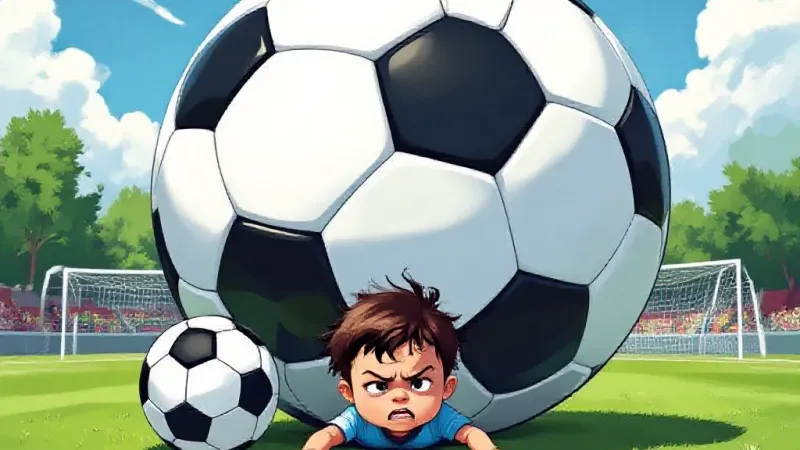
Following a significant surge in viewership during the recent FIFA World Cup, new data reveals that millions of American parents have rapidly enrolled their children in youth soccer leagues. This widespread adoption, they claim, is an urgent need to secure early athletic advantages and preemptively mitigate any future societal embarrassment linked to their child's inability to 'bend it like Beckham.' This sudden 'boom' appears less driven by organic passion and more by a desperate scramble to keep up with neighbors, or to ensure offspring are marketable for elite private school admissions valuing a 'well-rounded' profile.
A study by the Institute for Parental Performance Anxiety (IPPA) found a direct correlation between World Cup viewership and the immediate purchase of bespoke, carbon-fiber shin guards, with average spending on youth soccer equipment skyrocketing 300% in suburban areas. "It's not about the love of the game, it's about the fear of being the only one at the neighborhood barbecue whose kid doesn't have a travel team," explained Dr. Brenda Kinsley, lead researcher. "The financial outlay is a crucial signifier of commitment, both to the sport and to avoiding the ignominy of having an un-athletic child. We saw a spike in inquiries for personal trainers for children as young as four, solely focused on 'soccer-specific agility' and 'on-field executive function.'"
Parents nationwide confirmed the trend, admitting their sudden, fervent enthusiasm for 'the global sport.' Tiffany from Scottsdale, Arizona, whose 5-year-old attends three soccer academies and has a designated "performance nutritionist," stated, "Honestly, I mostly watched the World Cup for the aesthetics and that one guy with the good hair. But everyone kept talking about how big soccer is getting. My neighbor's kid is already playing select, and I just couldn't risk ours falling behind. What if they grow up and don't understand the offside rule? That would be mortifying at a corporate retreat. Plus, my husband says he wants our son to understand 'global commerce dynamics' through sports."
The demand for advanced data analytics for 8-year-olds and personal brand management for toddlers with exceptional dribbling skills has also seen an unprecedented uptick. Many youth coaches now report parents attempting to negotiate "ROI-based playing time metrics" for their children, demanding quarterly performance reviews and projection models for future NCAA scholarship potential before age seven. The 'boom' also extends to an explosion in themed birthday parties featuring obscure European club mascots and a sudden surge in conversations about "xG" by individuals who previously believed it was a new energy drink. This ensures a superficial, yet highly visible, engagement with the sport.
Experts predict this latest wave of enthusiasm will last precisely until the next major global sporting event captures America's fleeting attention, at which point millions of tiny cleats will be relegated to dusty garage corners, awaiting the next culturally approved athletic obsession, probably involving drones.