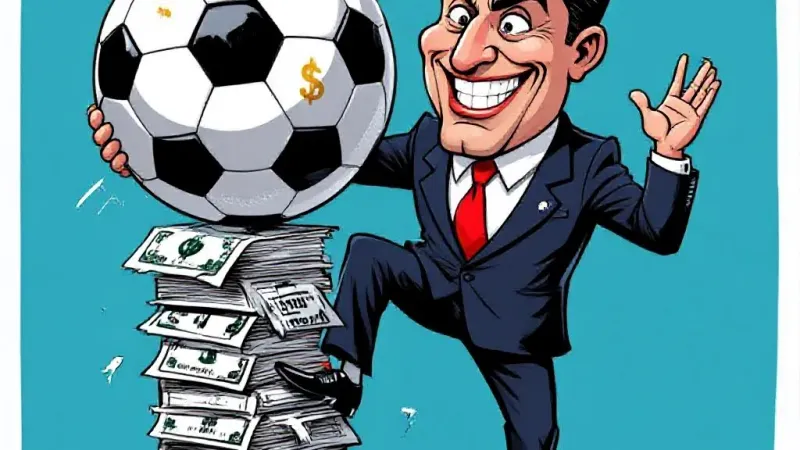
The U.S. State Department announced today that Iran’s national football team has been granted visas to compete in the upcoming World Cup, ending weeks of speculation that the U.S. might — for a fleeting moment — prioritize, you know, any of the myriad human rights issues directly tied to the Iranian regime over a highly profitable sporting event. The decision underscores the Biden administration's unwavering commitment to the principle that international soccer transcends bothersome ethical entanglements.
A State Department spokesperson, speaking anonymously because "some things just look better without a face attached, especially when you're explaining this," clarified the decision. "Look, we understand optics," the spokesperson said, swirling a lukewarm coffee in a branded mug. "But at the end of the day, international sports are about unity, commerce, and ensuring broadcast rights deals don't get messy. Are there legitimate concerns about state-sponsored violence, suppression of women's rights, and systematic oppression? Absolutely. Do they factor into the immediate ability of 23 men to kick a ball around a field for global entertainment? Absolutely not. We have very clear lines drawn in the sand, and one of them is 'don't mess with FIFA.'"
The decision reportedly came after intense lobbying from FIFA, whose delegation reminded U.S. officials that the global audience for football vastly outnumbers the global audience for, say, genuine international accountability or moral consistency. "It's about the bigger picture," explained a FIFA representative, who also asked for anonymity while polishing a diamond-encrusted tie pin and adjusting their Rolex. "The beautiful game transcends politics. And by 'politics,' we mean 'anything that might cost us sponsorship revenue or complicate travel for a beloved, revenue-generating team.' We value all our members equally, as long as their national federations meet their financial obligations and show up for matches."
When pressed on the seeming disconnect between the U.S.'s stated foreign policy goals – which often involve sanctioning the very regime whose athletes are now being welcomed – and its sudden embrace of a dictatorship known for widespread human rights abuses, a White House aide simply shrugged. "We're showing flexibility," they said, adjusting a lapel pin that read "Free Market Morality." "Sometimes, you gotta put the 'global' in 'global superpower' by letting dictatorships send their best athletes to play. It's character building for the rest of us, reminds us that the world is a complex place where principles have a fluctuating market rate, and sometimes, that rate is determined by how many people want to watch a penalty shootout. Plus, think of the tourism dollars. Everyone wins. Except, maybe, those actually fighting for freedom, but they're not really a 'team' are they?"
The move ensures that while ordinary Iranians face brutal repression and summary executions, their national team will at least enjoy the full American experience: overpriced stadium snacks, corporate sponsorships, and the unwavering delusion that everything is perfectly fine.