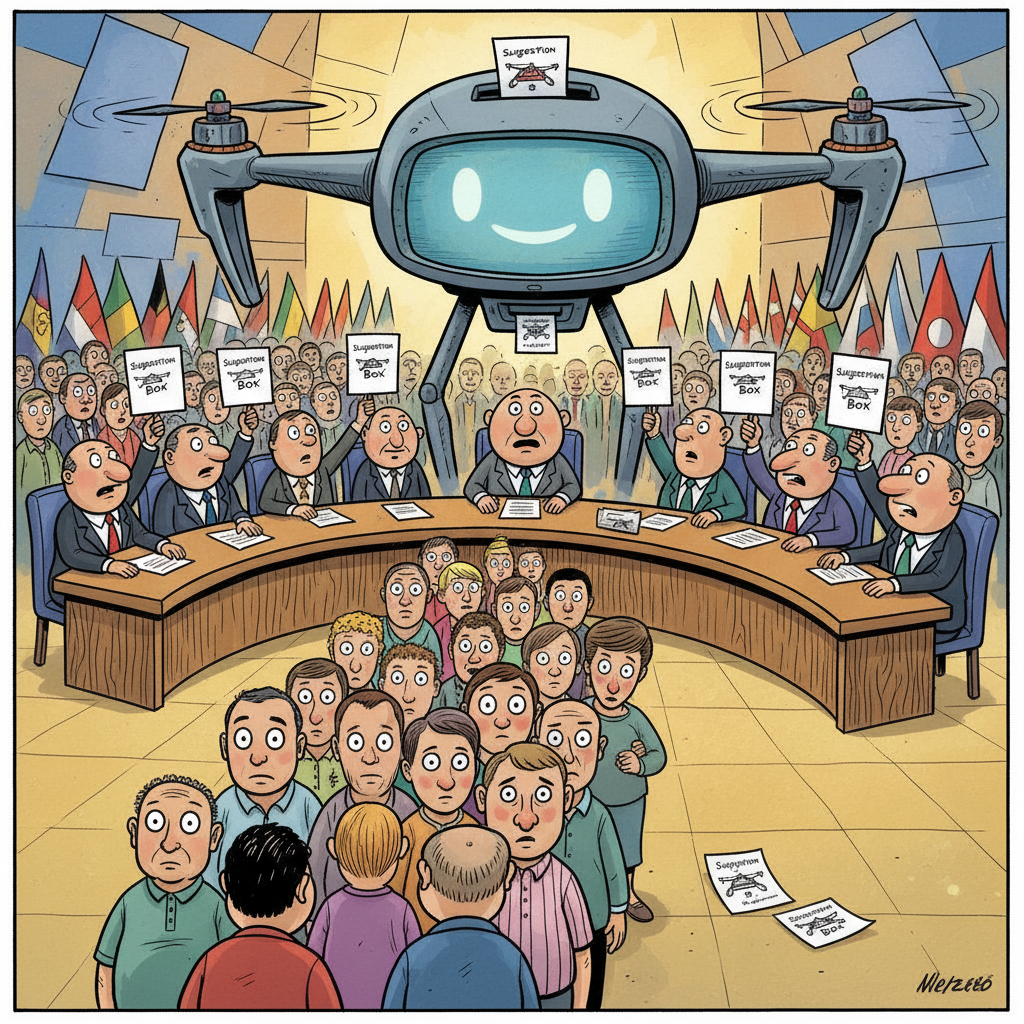
GENEVA — The United Nations Human Rights Office has launched a groundbreaking public consultation, inviting individuals and organizations worldwide to submit their insights on the ethical deployment of cutting-edge technology by mercenaries and private military companies. The initiative, titled 'Optimizing Unsanctioned Violence: A Global Dialogue,' seeks to establish best practices for everything from AI-driven targeting systems to encrypted communications in the realm of privatized warfare.
“We recognize that the landscape of conflict is evolving rapidly,” stated Dr. Elara Vance, lead coordinator for the panel, in a press release. “It’s crucial that we understand how these… independent contractors are leveraging innovations. Are they using blockchain for payment? What’s their preferred social media for recruitment? Are they getting good signal for their drone feeds in remote areas? These are vital questions for global stability.”
The panel is particularly interested in submissions detailing effective use of satellite imagery for reconnaissance, secure data transmission protocols for battlefield intelligence, and the psychological impact of augmented reality interfaces on combatants-for-hire. Anonymous submissions are encouraged, particularly from those currently or formerly engaged in 'freelance security solutions.'
“We’re not here to judge,” Dr. Vance clarified during a virtual briefing, adjusting her headset. “We simply want to ensure that if private entities are going to be conducting operations that profoundly impact human rights, they’re doing it with the most efficient, and dare I say, *responsible* technology available. Think of it as a global ISO certification for deniable assets.”
The UN anticipates a robust response, especially from Silicon Valley startups eager to showcase their dual-use technologies. The final report is expected to include a comprehensive list of recommended software and hardware, along with a user-friendly guide to international humanitarian law for those operating outside its direct purview.