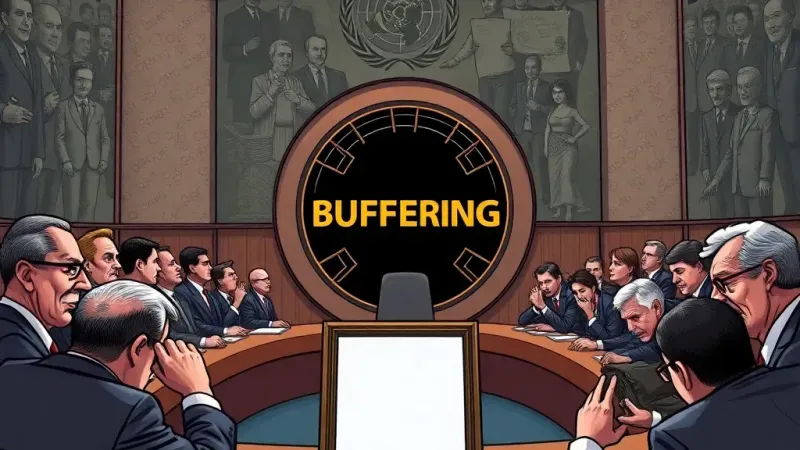
UNITED NATIONS — The United Nations Security Council convened an emergency late-night session Tuesday after the critically acclaimed 2022 film, *Aesthetic Desperation*, was inexplicably removed from the global streaming platform, StreamFlix. Diplomatic sources confirm the immediate and widespread digital outcry prompted global leaders to address what many are calling a "catastrophic blow to collective cultural memory" and a "precedent-setting act of artistic suppression." The impromptu summit marked the first time the Council has met to discuss a content licensing dispute, highlighting the perceived gravity of the situation.
The sudden disappearance of the film, which boasts a 98% "Certified Fresh" rating on the aggregate review site RottenTomatoes.com and was widely lauded for its innovative use of slow-motion close-ups of artisan toast, triggered a digital maelstrom. Within hours, the hashtag #WhereIsAestheticDesperation trended globally, eclipsing urgent discussions on climate change, ongoing geopolitical conflicts, and the pending launch of a new celebrity-backed NFT collection. Petitions demanding the film's immediate reinstatement garnered 4.7 million signatures in less than seven minutes, underscoring the precarious and often transient state of digital cultural access in the subscription 2. 2 users reported feelings of "digital phantom limb syndrome," a newly recognized phenomenon where the absence of a previously accessible media object causes acute psychological distress.
"While the emotional intensity of the global response is certainly noteworthy, it’s also a stark reminder that consumers don't actually own digital content; they merely license temporary access to it, often contingent on Byzantine contractual agreements between studios and distributors that expire with the regularity of a seasonal allergy," stated Dr. Lena Petrova, Chair of Digital Content Security at the Institute for Algorithm Ethics, during a rapidly assembled press conference held simultaneously in the metaverse and on a Zoom call that repeatedly disconnected. "Frankly, people are acting like the Library of Alexandria just burned down again, but it's just a movie that will probably be back on a different platform next month, or available for rent for $19.99. We've seen similar 'cultural disappearances' when a favorite fast-food item is removed from the menu."
Ambassador Kaelen Sharma, Permanent Representative of the Federated States of Micronesia to the UN, visibly exasperated during a late-night press briefing, emphasized the grave implications. "Our peace and security agenda is being held hostage by this algorithm-driven cultural trauma. We’re drafting a resolution that would classify unexpected content removal as a Level 3 humanitarian crisis, requiring immediate intervention and perhaps a strongly worded tweet from the Secretary-General himself." News networks, for their part, have dedicated continuous coverage, featuring tearful fan interviews, panel discussions with cultural critics debating the ontological status of temporarily unavailable IP, and a new segment titled "The Unwatchables: Gaps in Our Digital Soul." One cable news analyst speculated that the removal could be a calculated move to "disrupt the collective unconscious," paving the way for a less aesthetically demanding cinematic future.
Experts predict that if the movie isn't restored by Friday, the fabric of reality itself might just decide to switch platforms without notice, deleting everyone's watch history.