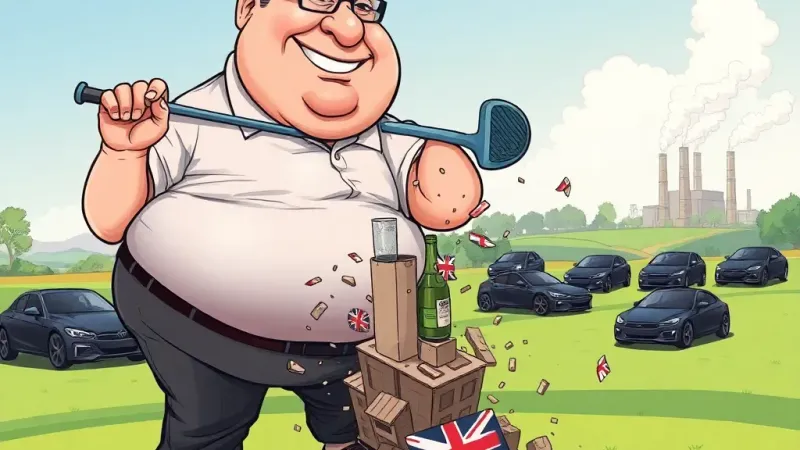
LONDON – In a candid internal document inadvertently circulated wider than intended, UK government officials expressed a collective sense of "profound relief" that the burgeoning influx of cheap Chinese electric vehicles will significantly reduce the nation's "burdensome obligation" to maintain a competitive domestic automotive industry. The leaked memo, titled "Strategic Re-evaluation of Industrial Commitment," outlines the perceived benefits of a future where Britain’s role in car production is largely confined to import logistics and consumer financing.
"Frankly, the entire domestic manufacturing sector has been a rather persistent administrative headache," stated Dr. Alistair Finch, head of the newly formed "Divestment & Chill" task force at the Department for Business and Trade, in a section of the memo marked "Internal Use Only (No Really, Don't Leak This)." "All those factories, the unions, the need for skilled labour, the pesky innovation requirements—it’s a lot to manage. With China so graciously stepping up to fill the global supply chain, we can now redeploy our national cognitive resources towards more pressing matters, such as devising new ways to tax foreign-produced goods and celebrating consumer choice."
The document suggests that the government views the impending dominance of Chinese automotive brands as a "net positive" for the average British citizen, citing projections that vehicle acquisition costs could decrease by as much as 0.7% over the next fiscal quarter. "This allows our citizens to enjoy cutting-edge technology at prices that more accurately reflect the true global cost of production, unburdened by quaint notions of national industrial resilience," the memo elaborated, estimating a potential £8.50 per year saving for the average household. Officials also noted the environmental benefits of fewer local factories emitting "unnecessary fumes" and the strategic advantage of relying entirely on another nation for critical infrastructure.
Analysts were quick to praise the government's bold new approach to economic policy. "It takes a certain kind of vision to openly embrace a strategy of industrial surrender as a form of liberation," remarked Dame Penelope Thorne, an independent economic observer and former car park attendant, speaking on a popular daytime news program. "This isn’t about being outcompeted; it’s about choosing not to compete. It’s the logical next step in a hyper-globalized 2 where the only thing that matters is Amazon Prime delivery times and the sheer volume of choices on offer, regardless of where they come from or what their production process means for our own people."
The government has confirmed the authenticity of the memo but clarified that its contents merely reflect "an early-stage brainstorming session regarding market efficiencies." Meanwhile, several former automotive workers have reportedly begun retraining for careers in drone repair, citing the "inevitable future of automated personal transportation and its ancillary support requirements."
Critics, however, pointed out that for a nation that once invented cars, the new strategy of 'just buying them from abroad' felt less like innovation and more like giving up.