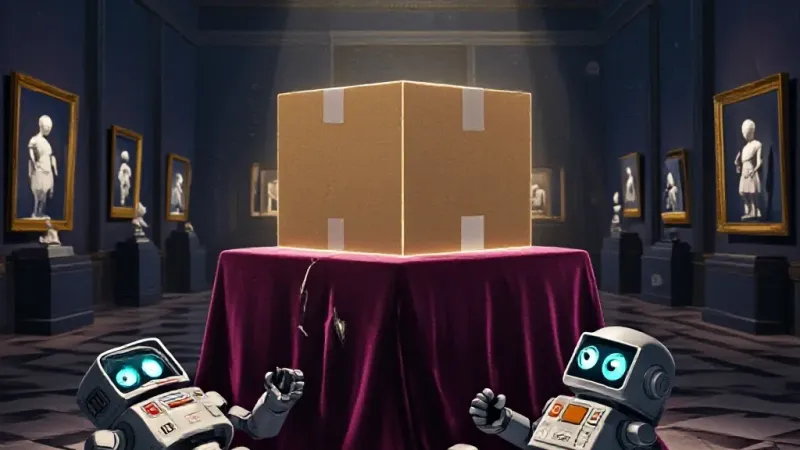
ROCHESTER, N.Y. — The National Toy Hall of Fame officially inducted the simple corrugated cardboard box into its permanent collection on Thursday, honoring the unadorned brown container for half a century of effortlessly humiliating every multi-million-dollar, battery-draining plastic contraption conjured by corporate toy executives.
The ceremony at the Strong National Museum of Play elevated the humble box alongside three other playthings, but curators quietly acknowledged that the packaging material was the only honoree in museum history capable of outperforming a $300 interactive robot in both total playtime and emotional attachment.
"While multinational toy conglomerates burn billions of dollars running focus groups to design plastic dogs that sing in three languages and require constant firmware updates, the cardboard box continues to hold an undefeated record in child engagement," said senior curator Edward Miller. "We tested an AI-powered talking bear that records your child's voice and streams personalized sleep stories. The child spent forty seconds looking for the power button, threw the bear down a flight of stairs, and then lived inside the shipping crate for three weeks straight."
Industry analysts noted that the box’s formal entry into the Hall of Fame represents a devastating failure for toy manufacturer R&D divisions, which have spent decades attempting to defeat basic folded paper through technological escalation. Despite adding Bluetooth speakers, glowing LED eyes, and subscription-based smartphone integrations to basic action figures, no commercial product has successfully disrupted the raw dopamine hit of an empty Amazon container dumped in the middle of a living room rug.
"It is a completely humiliating breakdown of our business model," said toy designer Marcus Vance. "We spent four years engineering an electronic pony with real synthetic hair, forty distinct voice lines, and a motor that mimics actual galloping movements. My five-year-old daughter used the pony as a footstool so she could climb deeper inside the Maytag dishwasher box. We cannot compete with structural cellulose. The box doesn't run out of AA batteries. The box doesn't crash when the home network goes down. The box is whatever the kid says it is, which is usually a submarine or a jail."
Child development experts praised the induction, pointing out that the cardboard box offers an open-ended narrative architecture that expensive electronic noise-makers intentionally destroy.
"When a toy plays its own sound effects, it strips the child of the right to make those sound effects themselves," explained pediatric psychologist Dr. Aris Thorne. "A plastic fire truck makes a loud siren sound that irritates the parents while giving the child nothing to do. A cardboard box requires the child to yell 'vroom' until their voice goes hoarse. It forces the brain to construct the reality, rather than consuming a pre-packaged simulation designed by a marketing department in Pawtucket."
Parents attending the exhibit expressed overwhelming relief at the museum's acknowledgment, framing the ceremony as long-overdue validation for their own budget-conscious purchasing decisions.
"Every holiday season, I ruin my credit score buying plastic junk that blinks, screams, and breaks within forty-eight hours of unboxing," said father of three Brian Cole. "Meanwhile, the giant brown box that the lawnmower came in has been sitting in our foyer since October. It has served as a space station, a pirate ship, and a sovereign nation with its own border control policies. If I could buy stock in corrugated cardboard, I would liquidate my 401(k) today."
Museum officials confirmed that future Hall of Fame nominating slates will continue to prioritize low-tech classics, with upcoming candidates including The Stick, A Handful of Dirt, and The Bubble Wrap Sheet—all of which currently maintain higher user-satisfaction scores and lower defect rates than the entire modern smart-toy industry combined.